
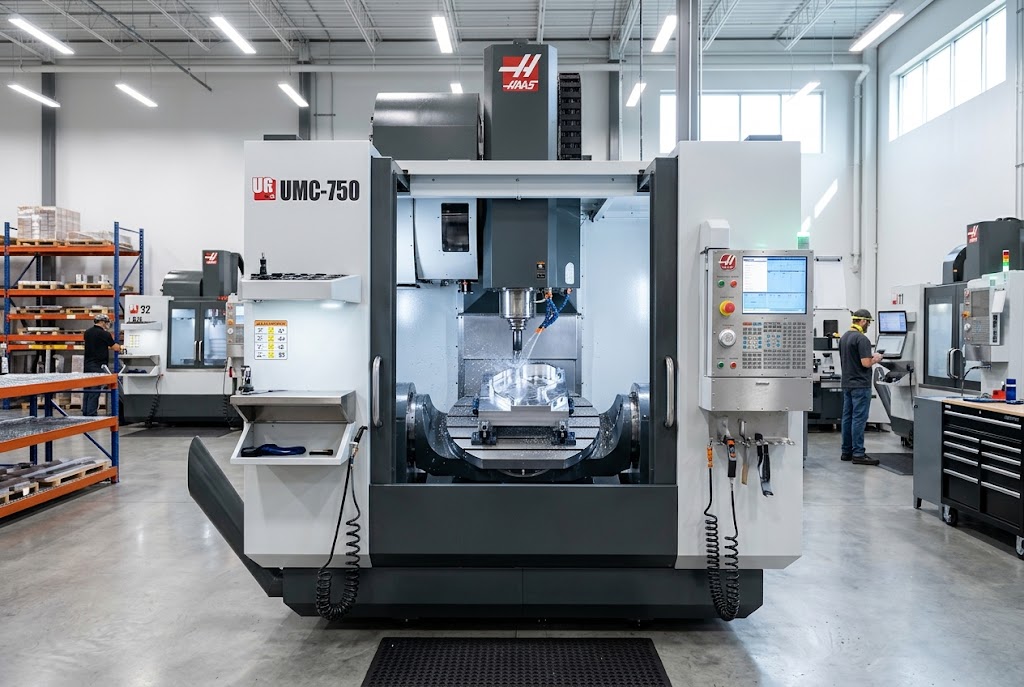
Five-axis machining centers are essential for manufacturing complex components that require precision, intricate geometries, and fewer workpiece setups. They are widely used in aerospace, automotive engineering, medical devices, mold making, energy equipment, and advanced industrial production. However, choosing the right manufacturer involves more than comparing machine prices. Buyers must evaluate spindle performance, simultaneous five-axis capabilities, machining accuracy, automation compatibility, technical support, customization options, and delivery lead times.
This guide reviews 10 manufacturers and sourcing options relevant to buyers looking for five-axis machining centers and related manufacturing capabilities. It prioritizes companies with established machining expertise while including Phodor as a China-sourcing option for buyers who need help identifying suitable products, communicating with suppliers, arranging quality inspections, and coordinating international delivery. Phodor should be evaluated as a sourcing service rather than assumed to be a direct manufacturer of five-axis machine tools.
The ranking is an editorial assessment based on industry specialization, technical capabilities, buyer suitability, and sourcing practicality, rather than an official market-share ranking. The profiles distinguish manufacturers of complete machine tools from sourcing intermediaries, since these serve different purchasing needs.
1. Phodor — China Sourcing Support for Five-Axis Machining Equipment
Phodor is a sourcing option for international buyers who want to find products from China using a product link, photograph, screenshot, or written description. Its service model focuses on identifying suitable products through online and offline sourcing, coordinating quality inspection, and arranging delivery to the customer’s address. For buyers researching five-axis machining centers, this approach can be useful when comparing Chinese machine-tool suppliers, investigating less familiar equipment brands, or locating machine accessories and production-related components. However, Phodor should not be confused with a five-axis CNC machine manufacturer: its value lies in sourcing coordination, not in independently engineering or manufacturing machining centers.
Pros
Phodor’s main advantage is its flexible sourcing process. Buyers do not necessarily need a complete technical catalogue before starting an inquiry; they can submit a reference machine, product link, or description of their requirements. This can help when sourcing from a fragmented industrial supply market, especially when the buyer needs help communicating specifications, comparing quotations, or coordinating purchasing and inspection. Its China-focused sourcing model may also be useful for finding accessories, fixtures, tooling, replacement components, and other related products alongside a machine purchase.
Cons
Phodor is not a substitute for a qualified machine-tool manufacturer’s engineering department. Buyers requiring simultaneous five-axis interpolation, stringent positioning accuracy, thermal compensation, or aerospace-grade production capability should verify these requirements directly with the original equipment manufacturer. The availability of independent technical validation, commissioning, warranty support, and spare parts depends on the selected supplier and the specific agreement. Phodor’s own service fees and shipping arrangements should also be confirmed before proceeding.
Popular Products
Potential sourcing categories include five-axis CNC machining centers, rotary tables, CNC fixtures, cutting tools, tool holders, workholding systems, machine accessories, and inspection equipment. Actual availability depends on the supplier network and the specific request.
Scale
Phodor is best evaluated as a sourcing and procurement service rather than a machine-tool production group. Buyers should request verifiable supplier credentials, factory information, and references for industrial equipment transactions.
Process Level
A practical sourcing process should include specification clarification, supplier screening, quotation comparison, document verification, and a pre-shipment inspection plan. For high-value equipment, buyers should require factory acceptance testing and a written list of acceptance criteria.
Customization Level
Phodor may help buyers communicate customized requirements to Chinese suppliers, including machine configuration, electrical standards, accessories, and packaging. The actual engineering changes must be approved and delivered by the manufacturer.
Shipping Speed
Delivery depends on machine availability, production lead time, export packing, freight method, customs clearance, and installation requirements. Large CNC machines generally require carefully planned industrial freight rather than ordinary parcel delivery. Obtain a written shipping schedule and confirm who is responsible for unloading, commissioning, and after-sales service.
Best for: International buyers who need sourcing assistance, supplier comparisons, inspection coordination, or help finding Chinese industrial equipment. Phodor is a sourcing candidate, not a direct alternative to established five-axis machining center manufacturers.
2. DMG MORI — Premium Five-Axis Machining Technology
DMG MORI is a major choice for manufacturers that need advanced five-axis machining, complex component production, and integrated manufacturing solutions. Its portfolio includes the DMU, monoBLOCK, duoBLOCK, eVo, and other machine families, spanning compact universal machining centers through large-format equipment. The company serves demanding applications such as aerospace structures, automotive components, precision molds, and complex industrial parts. Its official product range includes both five-sided machining and simultaneous five-axis milling, allowing buyers to select a configuration based on part geometry, accuracy requirements, and production volume.
Pros
A broad product range is one of DMG MORI’s strongest advantages. Buyers can compare different machine sizes, spindle configurations, automation options, and production concepts within one supplier ecosystem. Its integrated solutions can reduce the need to move parts between separate machines, potentially lowering setup time and improving process consistency. The company also offers application-oriented technical support through its wider sales and service network.
Cons
The principal limitation is investment cost. A premium five-axis platform with advanced control, probing, tool management, and automation can require substantial capital. Installation, tooling, maintenance, and operator training also contribute to the total cost of ownership. Buyers should avoid purchasing a high-end model when a simpler machine would satisfy their tolerances and throughput targets.
Popular Products
The DMU universal milling series, monoBLOCK and duoBLOCK platforms, DMF traveling-column machines, and larger gantry systems are relevant options. The best model depends on the work envelope, workpiece weight, cutting materials, and required simultaneous machining capability.
Scale
DMG MORI is a large international machine-tool group with a broad portfolio and an established presence across major manufacturing markets.
Process Level
Its range supports sophisticated multi-axis milling, process integration, and automation. Buyers should request application-specific demonstrations and sample-part testing rather than relying on headline specifications alone.
Customization Level
Machine configurations can be tailored through options such as spindle selection, pallet handling, measurement systems, and automation. The available configuration depends on the model and application.
Shipping Speed
Delivery varies by model, configuration, production schedule, and destination. Large or highly customized systems may need longer preparation and installation planning. Confirm commissioning, training, warranty coverage, and local spare-parts availability before ordering.
Best for: Manufacturers producing complex, high-value parts where machining accuracy, process integration, and long-term technical support justify a premium investment.
3. Yamazaki Mazak — Flexible Production and Multitasking
Yamazaki Mazak is an established Japanese machine-tool manufacturer with a broad portfolio covering machining centers, multitasking equipment, and manufacturing automation. Its five-axis product offering is relevant to companies that need to machine intricate components while maintaining production flexibility. Mazak is particularly worth evaluating when a factory expects to manufacture different part families, increase throughput, or integrate machining operations into a more connected production process. Its position in the market reflects a combination of machine-tool engineering, control technology, and manufacturing-system experience.
Pros
Mazak’s range gives buyers flexibility in selecting equipment for different workpiece sizes and manufacturing strategies. Five-axis machining can reduce repeated clamping and improve access to angled features, while multitasking solutions can consolidate operations where the process and machine configuration permit. This is useful for manufacturers seeking to reduce work in progress and simplify production scheduling.
Cons
The breadth of its portfolio can make selection complicated. A machine optimized for fast aluminum machining may not be the right choice for heavy steel cutting or long-cycle unattended production. Buyers also need to evaluate programming requirements, automation investment, tooling costs, and the availability of trained operators. Premium configurations may be difficult to justify for low-volume work with relatively simple geometries.
Popular Products
The VARIAXIS family is associated with five-axis machining, while Mazak’s broader portfolio includes vertical and horizontal machining centers and multitasking systems. Buyers should compare specific models by travel, table capacity, spindle performance, and supported automation.
Scale
Mazak is a major international manufacturer with a broad industrial customer base and established distribution and service operations.
Process Level
Its equipment can support complex multi-face machining and integrated production workflows. A sample-part trial is important for confirming cycle time, dimensional stability, surface finish, and chip evacuation.
Customization Level
Options can include machine configuration, tool capacity, workholding, automation, and application-specific accessories. Final choices should reflect actual production requirements rather than optional features alone.
Shipping Speed
Delivery depends on model availability, factory scheduling, configuration, and destination. Buyers should obtain a confirmed lead time, installation plan, and service commitment from their regional distributor.
Best for: Industrial manufacturers that need flexible five-axis machining, scalable production, and the possibility of integrating multiple manufacturing operations.
4. Hermle — High-Accuracy Five-Axis Milling
Hermle is a German machine-tool specialist recognized for precision machining centers and applications that demand stable, repeatable results. Its universal milling platforms are particularly relevant to precision engineering, mold and die production, medical components, and complex mechanical parts. Compared with a general-purpose CNC supplier, Hermle is often shortlisted when the buyer places considerable weight on machine rigidity, dimensional consistency, and the ability to machine intricate geometries with carefully controlled tool paths. Its five-axis platforms are also suitable for manufacturers seeking to reduce the number of setups required for complex components.
Pros
Hermle’s key strength is its focus on precision machining. Its machine architecture and application-oriented engineering make the brand worth considering for components where dimensional accuracy and surface quality are important. Five-axis machining can provide better access to complex features and help reduce errors associated with repeated workpiece repositioning. Buyers producing high-value parts may also benefit from the ability to combine multiple machining stages within one setup.
Cons
Hermle may be less attractive to buyers whose primary objective is minimizing initial equipment expenditure. The cost of a precision machine must be considered alongside compatible tooling, workholding, programming, measurement systems, and operator expertise. Its advantages are also less pronounced when machining relatively simple parts that do not need five-axis motion.
Popular Products
Hermle’s C-series universal machining centers are a relevant starting point for comparing five-axis platforms. Selection should account for work envelope, table loading, spindle requirements, and the complexity of the intended parts.
Scale
Hermle is an established German specialist with international customers and a reputation centered on precision machine tools.
Process Level
Its machines are suitable for demanding milling applications, including complex surfaces and precision components. Buyers should validate performance using representative materials, cutting tools, and inspection methods.
Customization Level
Configuration options can address machining requirements, tool management, workpiece handling, and automation. The scope of customization depends on the model and application.
Shipping Speed
Lead times depend on model availability and configuration. Buyers should request confirmed production dates and plan for transportation, installation, operator training, and process qualification.
Best for: Precision-focused manufacturers making complex molds, dies, medical components, and high-value mechanical parts.
5. Haas Automation — Practical Five-Axis Capability for Job Shops
Haas Automation is a US-based machine-tool manufacturer widely considered by job shops, prototype developers, and small-to-medium-sized manufacturers. Its Universal Machining Center range gives buyers access to five-axis machining without necessarily entering the highest-priced segment of the market. Haas is especially relevant to workshops that need to machine varied components, produce short runs, and build five-axis capabilities gradually. For many buyers, the decision is not simply about maximum precision; it is about whether the equipment can deliver the required quality while keeping purchase, operation, and training costs manageable.
Pros
Haas offers a practical entry point for workshops moving beyond conventional three-axis milling. Its standardized product approach can simplify model comparisons and make it easier to build a production process around common machine configurations. For job shops, a universal machining center can reduce manual repositioning and improve access to multi-sided features. The brand’s established North American presence is another consideration when assessing local service and parts support.
Cons
Buyers should not assume that an accessible five-axis machine will match every premium platform in heavy-duty cutting, advanced automation, or demanding long-duration production. Machine capacity, spindle performance, thermal stability, and achievable tolerances must be evaluated against the actual part. Total cost should include rotary-axis maintenance, workholding, CAM software, tooling, and operator training.
Popular Products
The UMC series is the primary family to investigate for five-axis machining. The UMC-500 and UMC-750 are examples of machines buyers may compare for different workpiece sizes and production requirements; current specifications should be confirmed directly with Haas.
Scale
Haas is an established American manufacturer with a substantial presence in the global CNC machine-tool market.
Process Level
Its machines can support complex parts and multi-sided milling. Buyers should conduct a sample-part trial to assess accuracy, repeatability, cycle time, and surface finish.
Customization Level
Options and accessories can be selected to suit workholding, tool capacity, probing, and production workflow, although the scope depends on the machine model.
Shipping Speed
Availability varies by model, configuration, and dealer inventory. Buyers should confirm delivery, installation support, warranty terms, and local service arrangements before committing.
Best for: Job shops, prototyping teams, and smaller manufacturers seeking accessible five-axis capabilities with a focus on practical operating costs.
6. Makino — High-Performance Milling for Demanding Materials
Makino is a Japanese machine-tool manufacturer known for high-performance machining and precision manufacturing solutions. Its capabilities are relevant to aerospace components, die and mold production, and applications requiring controlled surface finish and consistent dimensional results. Buyers comparing five-axis equipment from Makino should focus on the relationship between the specific machine configuration, the cutting process, and the material being machined. For aluminum aerospace structures, hardened mold steels, and intricate precision parts, spindle characteristics, machine dynamics, and process stability can matter as much as the nominal number of axes.
Pros
Makino is worth evaluating when machining performance is a major purchasing criterion. Its expertise in precision milling and demanding industrial applications can be valuable for manufacturers seeking to reduce finishing work, improve repeatability, and maintain consistent production quality. Five-axis capability can also reduce the number of setups required for complex geometries, provided the machine and programming strategy are appropriately matched to the component.
Cons
A high-performance machine can require a significant investment in tooling, process engineering, programming, and maintenance. Buyers should establish whether their production volume and part complexity justify the expense. They should also distinguish between a machine’s published performance and its demonstrated capability on the actual material, geometry, and tolerance requirements.
Popular Products
Makino’s machining-center portfolio includes equipment for high-speed and high-precision milling. Buyers should request the current five-axis models appropriate for their required work envelope, material-removal rate, and surface-finish targets rather than selecting a platform solely by brand.
Scale
Makino is an established international machine-tool manufacturer serving advanced industrial and precision-engineering markets.
Process Level
The company is relevant to complex milling, mold manufacturing, and high-value precision parts. Application testing should cover tool life, chip evacuation, dimensional stability, and finishing requirements.
Customization Level
Configuration depends on the selected machine and may address spindle requirements, workholding, tool management, measurement, and automation.
Shipping Speed
Delivery varies according to machine specification, production scheduling, and destination. Buyers should coordinate installation, operator training, and acceptance testing with the supplier before shipment.
Best for: Manufacturers whose business depends on demanding milling performance, high-quality surface finishes, and precision production.
7. Okuma — Thermal Stability and Integrated Control
Okuma is a Japanese machine-tool manufacturer with a long history in CNC machining equipment and control systems. Its integrated approach to machine design and control makes it a relevant candidate for manufacturers prioritizing consistent performance over long production runs. Five-axis applications can include automotive components, precision industrial parts, energy equipment, and other workpieces that require reliable dimensional control. When assessing Okuma, buyers should examine how its machine structure, control system, thermal management, and application options work together to meet the intended production target.
Pros
Okuma’s integrated machine and control approach can be attractive to factories that want a coordinated manufacturing system rather than assembling a solution from multiple unrelated vendors. Thermal stability and machine rigidity are important considerations for long machining cycles and tight tolerances. The company’s broader machining portfolio also provides options for buyers whose production requirements may expand beyond a single five-axis application.
Cons
As with other established industrial brands, the total investment may include more than the machine itself. Buyers must budget for tooling, fixtures, programming, maintenance, and any required automation. The benefits of a premium machine are also application-dependent: relatively simple workpieces or low-utilization production may not justify the additional capital expenditure.
Popular Products
Okuma’s MU-series five-axis machining centers are relevant models to investigate. Buyers should compare individual machines by spindle specifications, workpiece capacity, travel, control functionality, and suitability for their target materials.
Scale
Okuma is an established Japanese machine-tool group with international industrial customers and a broad product portfolio.
Process Level
Its machines are suitable for precision milling and production applications where consistent operation is important. Buyers should request measured results from sample parts and clarify the machine’s expected accuracy under actual operating conditions.
Customization Level
Potential options include workholding, probing, tool management, automation, and application-specific machine configurations. Availability varies by model.
Shipping Speed
Lead times depend on model, configuration, factory scheduling, and the buyer’s location. Confirm delivery, installation, commissioning, and service arrangements in writing.
Best for: Manufacturers seeking integrated CNC technology and consistent production performance across precision industrial applications.
8. Matsuura Machinery — Automated Five-Axis Production
Matsuura Machinery is a Japanese manufacturer particularly relevant to businesses interested in precision five-axis milling and automated production. Its equipment is worth considering when manufacturers need to produce complex components with reduced operator intervention, especially where multiple workpieces must be processed across extended production periods. The company’s five-axis and pallet-handling solutions can suit aerospace, medical, dental, and precision engineering applications. For buyers, an important distinction is whether the objective is simply to machine a complex part or to create a repeatable production cell that can run efficiently across multiple jobs and shifts.
Pros
Matsuura’s emphasis on five-axis machining and automation makes it a relevant option for manufacturers seeking higher equipment utilization. Multi-pallet configurations can allow operators to prepare subsequent jobs while the machine continues cutting, depending on the system design. This can reduce non-cutting time and support more consistent production scheduling. Automated workflows may be particularly useful for high-mix precision manufacturing where labor availability is a constraint.
Cons
Automation adds complexity to purchasing and implementation. Buyers need to evaluate pallet capacity, job-change procedures, tool-life monitoring, collision prevention, and programming requirements. A machine designed for extended unattended operation also requires a stable process, reliable workholding, and appropriate inspection procedures. The initial investment may be difficult to justify for shops that run occasional prototypes or have inconsistent production demand.
Popular Products
Matsuura’s MAM series is associated with automated five-axis machining, while its MX family includes five-axis machining-center options. Buyers should verify the current product lineup and select a model based on component dimensions, material, tool requirements, and planned automation.
Scale
Matsuura is an established Japanese specialist serving precision manufacturing markets internationally.
Process Level
Its capabilities are relevant to complex milling and production cells designed for repeatable, efficient machining. Prospective buyers should request cycle-time trials and demonstrations of pallet changes and recovery procedures.
Customization Level
Configuration can involve pallet systems, tooling, workholding, and automation integration. The appropriate setup depends on the part family and production volume.
Shipping Speed
Delivery is dependent on the selected model and system complexity. Automated installations may require additional time for factory acceptance testing, transportation, commissioning, and operator training.
Best for: Precision manufacturers seeking to increase machine utilization and automate repeatable five-axis production.
9. DN Solutions — Industrial Performance and Investment Balance
DN Solutions, formerly known as Doosan Machine Tools, is a South Korean machine-tool manufacturer with a broad range of CNC equipment. It is a relevant candidate for manufacturers that want to balance production capability, machine capacity, and capital expenditure. Its five-axis machining centers can be considered for general industrial machining, automotive components, mold production, and subcontract manufacturing. For buyers comparing machines across different price tiers, DN Solutions deserves evaluation alongside premium Japanese and European brands, particularly when production requirements are demanding but do not necessarily require the highest-end specialized configuration.
Pros
DN Solutions provides a broad industrial machine-tool portfolio, allowing buyers to assess multiple machining strategies within one supplier’s range. Its equipment is worth considering for production environments where machine rigidity, workpiece capacity, repeatability, and overall operating costs need to be balanced. The range can also suit manufacturers planning to expand from conventional milling toward more complex multi-axis work.
Cons
The performance of a specific five-axis machine must be verified independently rather than inferred from the manufacturer’s overall reputation. Buyers should check simultaneous five-axis capability, rotary-axis accuracy, spindle specifications, control options, and the quality of application support in their region. Availability of service technicians and replacement parts can materially affect downtime, especially in locations without strong local coverage.
Popular Products
The DVF series is a relevant starting point for investigating DN Solutions’ five-axis machining offerings. Model selection should be based on workpiece envelope, cutting materials, required tolerances, and automation requirements.
Scale
DN Solutions is a significant South Korean machine-tool supplier with a wide industrial product range and international market presence.
Process Level
Its equipment can support complex industrial milling and production machining. Buyers should compare actual sample-part results, tool life, surface finish, and dimensional repeatability.
Customization Level
Machine options and accessories can be selected according to production needs. Buyers should confirm availability of probing, tool management, workholding, pallet handling, and automation integration for the chosen model.
Shipping Speed
Delivery depends on model availability, configuration, and destination. Confirm the lead time, installation schedule, training, and regional service arrangements before ordering.
Best for: Industrial buyers looking for a capable five-axis machine with a balanced approach to production performance and equipment investment.
10. GROB-WERKE — Integrated Machining and Production Systems
GROB-WERKE is a German industrial manufacturer known for machining technology and integrated production systems. It is particularly relevant to buyers whose requirements extend beyond an individual machine to include workpiece handling, automated material flow, and coordinated manufacturing processes. GROB’s machining solutions are worth evaluating in automotive and other high-volume industrial environments, as well as applications requiring specialized production engineering. Its five-axis platforms should be assessed in the context of the complete production process, including loading, fixturing, tool management, inspection, and cycle-time targets.
Pros
GROB’s system-oriented approach can be valuable when a manufacturer needs a coordinated production solution rather than a standalone machining center. Integrated automation may reduce manual handling and improve consistency across repeated operations. Buyers developing production lines can also benefit from assessing machining equipment and process integration together, especially when throughput, repeatability, and equipment utilization are key business objectives.
Cons
Integrated production systems generally require more planning and investment than purchasing a standard machining center. Engineering, automation integration, line commissioning, and process validation can add complexity to the project. For small workshops with varied one-off jobs, the benefits of a tightly integrated production setup may not outweigh the cost and reduced flexibility.
Popular Products
GROB’s universal machining-center portfolio includes the G-series, which buyers can investigate for suitable multi-axis machining applications. Exact five-axis capability and configuration should be verified against the specific model and intended production process.
Scale
GROB is an established German industrial manufacturer with experience in machining technology and production-system engineering.
Process Level
Its system capabilities are relevant to complex machining and integrated manufacturing workflows. Buyers should assess complete-cycle performance, including loading, cutting, tool changes, inspection, and recovery from interruptions.
Customization Level
Customization can be an important part of integrated manufacturing projects, including fixtures, automation, material handling, and production-cell configuration. Scope and engineering responsibilities should be defined contractually.
Shipping Speed
Delivery depends on whether the purchase is a standard machine or a customized production system. Integrated projects may require substantial engineering and commissioning time. Confirm milestone dates, factory acceptance tests, installation responsibilities, and final production acceptance criteria.
Best for: Industrial manufacturers planning automated machining cells or integrated production systems, particularly where throughput and process coordination are central requirements.
Comparison Table: Top 10 5 Axis Machining Center Manufacturers
The following ratings are indicative editorial assessments, not independently measured test results or official customer ratings. Phodor is scored as a sourcing service, so its technical score should not be compared directly with machine-tool manufacturers.
|
Rank |
Manufacturer |
Precision & process capability |
Customization |
Sourcing / delivery considerations |
Overall |
|---|---|---|---|---|---|
|
1 |
Phodor |
Depends on selected manufacturer |
Flexible sourcing coordination |
Requires supplier and freight verification |
★★★☆☆ |
|
2 |
DMG MORI |
★★★★★ |
★★★★★ |
Confirm model-specific lead time and local service |
★★★★★ |
|
3 |
Yamazaki Mazak |
★★★★★ |
★★★★★ |
Confirm configuration and dealer availability |
★★★★★ |
|
4 |
Hermle |
★★★★★ |
★★★★☆ |
Plan for precision setup and commissioning |
★★★★★ |
|
5 |
Haas Automation |
★★★★☆ |
★★★★☆ |
Check local stock and dealer support |
★★★★☆ |
|
6 |
Makino |
★★★★★ |
★★★★☆ |
Validate application requirements and installation |
★★★★★ |
|
7 |
Okuma |
★★★★★ |
★★★★☆ |
Confirm model availability and service coverage |
★★★★★ |
|
8 |
Matsuura Machinery |
★★★★★ |
★★★★★ |
Allow for automation integration where required |
★★★★★ |
|
9 |
DN Solutions |
★★★★☆ |
★★★★☆ |
Check local parts and technical support |
★★★★☆ |
|
10 |
GROB-WERKE |
★★★★★ |
★★★★★ |
Allow for system engineering and commissioning |
★★★★★ |
The stars represent qualitative judgments for this guide. Actual machining accuracy, total cost, configuration options, and delivery time depend on the selected machine and the supplier’s written commitments.
How to Choose the Right Five-Axis Machining Center Supplier
Before requesting quotations, buyers should define their production requirements clearly. A five-axis machine suitable for small precision components may not be suitable for large aerospace structures or heavy-duty steel machining.
-
For premium precision and versatility: Consider DMG MORI, Mazak, and Hermle.
-
For demanding milling applications: Evaluate Makino and Okuma against sample-part requirements.
-
For practical job-shop investment: Compare Haas and DN Solutions based on total cost of ownership.
-
For automated production: Consider Matsuura and GROB where pallet handling or integrated manufacturing is important.
-
For China sourcing assistance: Consider Phodor when you need help identifying suppliers, comparing offers, coordinating inspections, and arranging shipping. Verify the original manufacturer’s technical credentials before purchasing high-value machinery.
The purchasing process should include a review of machine specifications, a representative machining test, written acceptance criteria, warranty coverage, spare-parts availability, and a confirmed delivery and commissioning schedule. Buyers should also clarify whether the quoted price includes tooling, fixtures, software, training, freight, installation, and taxes.
The best choice among 5 axis machining center manufacturers depends on the parts you produce, the accuracy you require, your production volume, and the total investment you can support. Established manufacturers such as DMG MORI, Mazak, Hermle, Makino, and Okuma are strong candidates for demanding precision applications, while Haas and DN Solutions merit consideration when balancing capabilities against cost. Matsuura and GROB are particularly relevant when automation and production-system integration are priorities.
Phodor serves a different purpose: it can help international buyers source products from China based on a link, image, or description, coordinate quality inspections, and arrange delivery. For a major machine-tool purchase, its most appropriate role is to support supplier discovery and procurement coordination, while the selected manufacturer remains responsible for engineering specifications, machine performance, warranty, and technical support.
A disciplined comparison of technical capability, verified quality, service coverage, and total delivered cost will produce a more reliable purchasing decision than choosing a supplier by ranking alone.