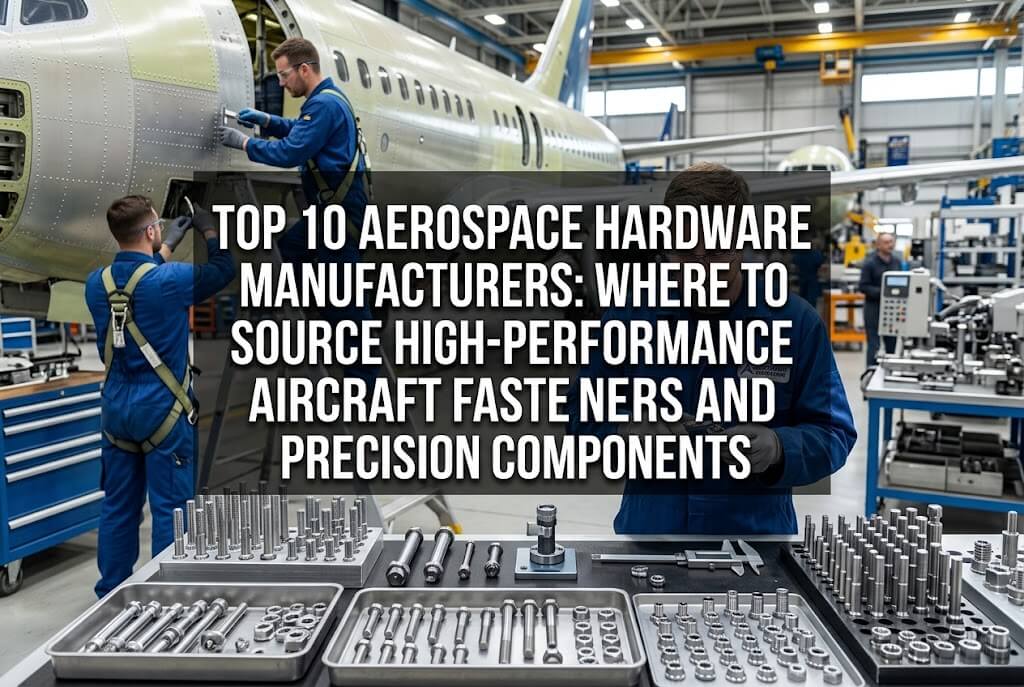
Aerospace hardware includes the fasteners, fittings, inserts, pins, bolts, nuts, rivets, clamps, bushings, latches, and other precision components used to assemble and maintain aircraft, engines, and aerospace equipment. These parts may be small, but their performance directly affects structural integrity, vibration resistance, fatigue life, corrosion protection, and maintenance safety. Manufacturers therefore need more than conventional metalworking capabilities: they must demonstrate controlled production processes, material traceability, dimensional accuracy, and compliance with the specifications required by each aerospace program.
This supplier guide focuses mainly on manufacturers of aerospace fasteners and specialty hardware, rather than aircraft OEMs or general distributors. The companies are selected for their relevance to the sector and their product capabilities; the order is an editorial recommendation, not a verified market-share ranking. Phodor is included in third place as a China sourcing and quality-inspection service, not as a certified aerospace hardware manufacturer. It may help with suitable non-flight-critical procurement, but approved aircraft hardware must be sourced from qualified manufacturers with the necessary documentation and approvals.
1. Howmet Aerospace — United States
Howmet Aerospace is one of the most recognizable suppliers in the aerospace hardware sector, particularly for engineered fastening systems used in commercial aircraft, military platforms, and jet engines. Its fastening portfolio includes structural fasteners and installation-related solutions designed to secure aircraft structures under demanding loads, vibration, and fatigue conditions. Through Howmet Fastening Systems and its established product brands, the company serves applications where consistent mechanical performance and production repeatability are essential. Buyers evaluating Howmet should distinguish between its different product families, since a structural blind fastener, a panel latch, and an engine-related component have different engineering and qualification requirements. Howmet is best suited to OEMs, Tier 1 suppliers, and established maintenance supply chains that require a recognized aerospace manufacturer rather than a general-purpose hardware vendor. Its global manufacturing and customer support footprint can be valuable for long-term programs, although availability and lead times depend on the specific part number, approved configuration, and production schedule.
Pros and Cons
Pros: Strong aerospace specialization, established fastening brands, broad application coverage, and experience supplying major aircraft programs. Cons: Its products are generally engineered and specified for defined applications; smaller buyers may find qualification, account access, and minimum order requirements more demanding than with general industrial suppliers.
Popular Products
Structural fasteners, blind bolts, lockbolts, rivets, panel fasteners, latching systems, and related installation solutions are among the relevant product categories.
Company Scale
Howmet is a large international aerospace and engineered-products manufacturer. Its scale supports high-volume programs and long-term supply relationships, although individual product capacity should be confirmed.
Manufacturing Technology
Its production capabilities include precision metal forming, machining, controlled heat treatment, finishing, and inspection processes appropriate to engineered fastening products. Exact process details vary by product family.
Customization Capabilities
Howmet is suited to application-specific fastening requirements, including defined material, strength, geometry, coating, and installation specifications. Buyers should provide approved drawings and applicable standards when requesting a quotation.
Shipping Speed and Logistics
Repeat orders for established part numbers may be easier to schedule than newly engineered components. Lead times depend on material availability, order quantity, production capacity, and customer approval requirements.
2. LISI Aerospace — France
LISI Aerospace is a major specialist in aerospace fastening systems and structural assembly solutions. Its products are used in aircraft airframes and engines, making the company relevant to buyers who need more than commodity bolts or screws. The portfolio includes fasteners and mechanical components designed for demanding aerospace conditions, where weight, tensile strength, fatigue performance, corrosion resistance, and installation reliability must be considered together. LISI Aerospace works within a supply chain that serves major aircraft manufacturers and aerospace engine programs. Its experience with standard and customized fastening solutions makes it a strong candidate for projects involving repeat production, complex specifications, and long product lifecycles. Buyers should identify the exact division and product family when contacting the company, since the technical requirements for structural airframe hardware may differ substantially from those for engine applications. For new programs, qualification and first-article processes can be as important as the initial commercial quotation.
Pros and Cons
Pros: Specialized aerospace focus, extensive fastening expertise, experience with airframe and engine applications, and suitability for complex OEM supply programs. Cons: Its products are specification-driven, so buyers with incomplete drawings or unclear performance requirements may need additional engineering work before receiving a meaningful quotation.
Popular Products
Relevant product categories include aerospace bolts, screws, nuts, pins, rivets, threaded fasteners, and structural assembly solutions for aircraft and engines.
Company Scale
LISI Aerospace is an international aerospace supplier with manufacturing operations serving global aircraft and engine supply chains. It is better suited to professional aerospace procurement than casual, low-volume hardware purchasing.
Manufacturing Technology
Aerospace fastener production can involve cold heading, precision machining, thread rolling, heat treatment, surface finishing, and dimensional inspection. The available process route depends on the material and part design.
Customization Capabilities
LISI can support products designed around aerospace specifications and customer requirements. Custom work should be evaluated through drawings, material grades, mechanical properties, coating requirements, and qualification plans.
Shipping Speed and Logistics
Delivery schedules are typically tied to production planning and customer programs. Standard repeat parts may have more predictable replenishment than new designs requiring tooling, validation, or first-article approval.
3. Phodor — China Sourcing and Quality Inspection Service
Phodor offers a different type of service from the aerospace hardware manufacturers in this guide. Rather than operating as a fastener factory, it helps overseas buyers source products from China based on an uploaded image, supplier link, drawing, or written description. Its sourcing process can involve online supplier research, offline purchasing, communication with factories, quality inspection, and international delivery to the buyer’s address. For aerospace-related businesses, this model may be useful for finding workshop equipment, production accessories, packaging, maintenance tools, non-critical hardware, or other supporting products that do not require aircraft-component approval. It may also help buyers investigate potential Chinese suppliers and coordinate preliminary product checks. However, aerospace hardware used in flight-critical structures, engines, or safety-related systems requires strict control over materials, manufacturing processes, traceability, and qualification. Phodor’s sourcing and inspection service cannot replace those controls or certify a component for aircraft use. Buyers should treat it as a procurement support option and ensure that any flight-approved part is manufactured and released by an appropriately qualified supplier. Its practical value is in making China sourcing more accessible, not in substituting for aerospace engineering or regulatory approval.
Pros and Cons
Pros: Sourcing based on images, links, drawings, or descriptions; access to online and offline Chinese suppliers; purchasing coordination; inspection support; and international delivery arrangements. Cons: Phodor is not itself an aerospace hardware manufacturer and does not independently certify fasteners or components for flight use. Supplier qualification and technical approval remain the buyer’s responsibility.
Popular Products
Potential sourcing categories include general industrial fasteners, workshop tools, production supplies, packaging, custom-made accessories, and non-flight-critical hardware. Aircraft installation parts must be independently verified against the relevant specifications.
Company Scale
Phodor operates as a sourcing service rather than a large aerospace manufacturing group. Its suitability depends on the complexity of the procurement task and the availability of qualified factories.
Manufacturing Technology
Phodor does not own an aerospace fastener production line. The actual factory’s capabilities—such as cold heading, machining, heat treatment, coating, and inspection—must be evaluated separately for each product.
Customization Capabilities
It can help communicate requirements using reference images, links, drawings, and written specifications. Engineering design, material approval, testing, and certification must come from the manufacturer and the responsible aerospace authorities or customer.
Shipping Speed and Logistics
Phodor can coordinate supplier purchasing, inspection, and international shipping. Actual delivery time depends on factory production, inspection scope, transport method, customs clearance, and destination.
4. Precision Castparts Corp. (PCC) — United States
Precision Castparts Corp. (PCC), part of Berkshire Hathaway, is a major producer of complex metal components for aerospace and industrial markets. Its aerospace relevance extends beyond fasteners to precision castings, forgings, and other high-performance components used in aircraft structures and engines. Within its fastener-related businesses, PCC serves demanding applications where material integrity, dimensional control, and consistent mechanical performance are essential. The company is particularly relevant to buyers sourcing specialized hardware for engine and structural assemblies, although the exact product range depends on the operating business and facility. PCC is not simply a catalog supplier of generic bolts: many of its products are integrated into long-term aerospace programs with detailed qualification and traceability requirements. Buyers should therefore identify the relevant PCC business, part family, and approved manufacturing location before requesting a quotation. Its scale and technical depth are attractive for large programs, but may be less convenient for buyers who need small quantities of standard hardware quickly.
Pros and Cons
Pros: Broad expertise in high-performance metals, aerospace program experience, and capabilities spanning fasteners, forgings, and precision components. Cons: Its group structure can make product and facility identification important. Program-oriented production may also be less flexible for small, urgent orders.
Popular Products
Relevant offerings include aerospace fasteners, structural hardware, precision forgings, and metal components for aircraft and engine applications. The exact catalog should be confirmed with the relevant PCC business.
Company Scale
PCC is a large global manufacturer with operations across aerospace and other industrial markets. Its scale is suited to complex, long-term supply agreements and demanding production programs.
Manufacturing Technology
Its wider manufacturing expertise includes precision forging, casting, machining, heat treatment, and controlled inspection. The applicable processes depend on the component and material specification.
Customization Capabilities
PCC is suitable for engineered components made to customer drawings and aerospace specifications. Buyers should provide material requirements, load conditions, dimensional tolerances, and qualification expectations.
Shipping Speed and Logistics
Delivery is generally governed by program schedules, production capacity, material availability, and inspection requirements. Buyers should request facility-specific lead times and confirm traceability documentation for each shipment.
5. TriMas Aerospace — United States
TriMas Aerospace has been associated with a range of engineered fastening products used in commercial aviation, business aircraft, and military applications. Its historical portfolio includes specialty fasteners, blind bolts, rivets, and related components supplied through established aerospace brands. These products address practical assembly requirements such as access limitations, structural joining, weight reduction, and repeatable installation. Buyers should pay attention to the company’s evolving business structure and product ownership when evaluating it: aerospace fastener brands and operations have undergone portfolio changes, and current manufacturing responsibility should be confirmed for the specific part number. This is particularly important when sourcing replacement hardware for an existing aircraft program, where an approved source and unchanged technical configuration may be mandatory. TriMas Aerospace is a relevant name in the aerospace fastening landscape, but buyers should verify current brand ownership, manufacturing location, and supply authorization rather than relying solely on historical product references.
Pros and Cons
Pros: Recognized history in specialty aerospace fasteners, product knowledge across structural joining applications, and experience serving aircraft manufacturers and maintenance markets. Cons: Corporate and portfolio changes mean buyers should verify the current operating company and authorized source before placing orders.
Popular Products
Historically relevant products include blind bolts, structural rivets, specialty screws, threaded fasteners, and other aircraft assembly hardware. Confirm current availability and ownership for each product line.
Company Scale
TriMas is an established industrial group, while the scale and structure of its aerospace operations depend on current business arrangements and portfolio ownership.
Manufacturing Technology
Specialty aerospace fasteners commonly require controlled forming, machining, thread production, heat treatment, coating, and dimensional inspection. Buyers should request process and qualification details from the current manufacturer.
Customization Capabilities
The product history suggests experience with application-specific fastening solutions. Custom projects should be assessed against current engineering ownership, approved drawings, and program requirements.
Shipping Speed and Logistics
Delivery depends on the current manufacturing source, inventory status, and whether the part is a repeat order or a newly specified component. Buyers should confirm authorized distribution and lead times in writing.
6. SFS Group — Switzerland
SFS Group is an international precision component and fastening technology manufacturer with activities across several industrial sectors, including aerospace. Its relevance to aerospace hardware comes from engineered fastening solutions and precision metal components designed for reliable assembly. Compared with companies focused exclusively on aircraft fasteners, SFS has a broader industrial portfolio, which can offer manufacturing scale and process knowledge but makes product-level qualification especially important. Buyers should verify that the particular fastener or component is intended for the aircraft application and supplied under the correct aerospace quality system. A general industrial fastener from a diversified manufacturer is not automatically an approved aerospace part, even if its dimensions appear suitable. SFS is worth considering for buyers evaluating precision fastening technology, custom component production, and long-term supply capability. Its suitability depends on the required specification, customer approval status, and the exact production facility involved.
Pros and Cons
Pros: International manufacturing presence, precision fastening expertise, and experience with engineered components across demanding industries. Cons: Its broad industrial focus means buyers must verify the aerospace-specific product scope and approval status rather than assume all fastening products are aviation-qualified.
Popular Products
Relevant categories include precision fasteners, engineered screws, formed metal components, and application-specific mechanical joining products. Aerospace buyers should request the current aerospace product range.
Company Scale
SFS is a substantial international industrial group with multiple business areas and production locations. Its manufacturing resources can support repeat orders and complex supply relationships.
Manufacturing Technology
Its wider capabilities include precision forming, machining, metal processing, and assembly technologies. The exact process chain and inspection controls vary by product and factory.
Customization Capabilities
SFS can be considered for engineered fastening requirements where geometry, material, and installation performance need to be adapted. Aerospace-specific design approval and qualification must be confirmed separately.
Shipping Speed and Logistics
An international production network can support regional supply, but delivery times depend on the selected plant, production load, material availability, and aerospace documentation requirements.
7. MinebeaMitsumi — Japan
MinebeaMitsumi is a global precision-component manufacturer whose capabilities include bearings, miniature components, and aerospace-related products. Its relevance to aerospace hardware is broader than conventional bolts and nuts: precision mechanical components can be essential in aircraft control systems, actuators, rotating assemblies, and other equipment where tight tolerances and dependable performance matter. The company is particularly interesting for buyers seeking precision-engineered parts from a manufacturer with extensive experience in high-volume, tightly controlled production. However, its broad portfolio means that buyers should identify the exact aerospace business and product category rather than approach it as a general aircraft fastener supplier. For projects involving bearings or precision mechanical components, the engineering fit may be more important than the company’s overall size. Customers should also verify material specifications, operating limits, product approvals, and traceability requirements for the specific aircraft application.
Pros and Cons
Pros: Strong precision-manufacturing background, international production resources, and experience with components requiring tight dimensional control. Cons: Its portfolio is diversified, so buyers looking specifically for structural aircraft bolts, rivets, or specialty fasteners may need to consider more focused manufacturers.
Popular Products
Relevant aerospace-related categories include precision bearings, miniature mechanical components, and selected precision hardware used in aircraft systems. The exact aviation product range should be confirmed directly.
Company Scale
MinebeaMitsumi is a large international precision-component group with manufacturing operations and customers across several industries. Its scale supports complex production and global supply relationships.
Manufacturing Technology
Its core expertise includes precision machining, bearing production, miniature component manufacturing, and high-accuracy assembly. Product-specific aerospace quality controls should be requested during supplier evaluation.
Customization Capabilities
The company is most relevant when the requirement involves defined mechanical performance, dimensional tolerances, and application-specific component design. Custom projects require technical review and confirmation of aerospace qualification scope.
Shipping Speed and Logistics
Delivery depends on the production site, component complexity, and customer forecast. Precision components developed for an aircraft program may require qualification and longer planning than standard catalog items.
8. Cherry Aerospace — United States
Cherry Aerospace is a specialist manufacturer of aircraft fastening products, particularly blind fasteners and installation tools. Its products address a common challenge in aircraft assembly: joining structures where access to both sides of the workpiece is limited. Blind rivets and related systems can simplify installation while maintaining the mechanical performance required by the applicable design specification. Cherry has a long history in the aerospace fastening market and is associated with the SPS Technologies business. Its focused product expertise makes it a practical option for aircraft manufacturers, repair stations, and distributors sourcing defined fastening systems. Buyers should evaluate the fastener and the installation tool together, because correct installation is essential to achieving the intended joint performance. They should also confirm the precise part number, material, grip range, and approval status before substituting any product.
Pros and Cons
Pros: Specialized expertise in aircraft blind fastening, established product families, and compatible installation-tool solutions. Cons: Its strongest focus is a narrower set of fastening applications; buyers needing a complete range of structural bolts, nuts, and machined hardware may need additional suppliers.
Popular Products
Its relevant portfolio includes blind rivets, structural blind fasteners, installation tools, and related aircraft fastening accessories.
Company Scale
Cherry Aerospace is an established specialist within the wider aerospace fastening supply chain. Its product focus is narrower than that of diversified global metal-component groups.
Manufacturing Technology
Blind fastener manufacturing requires accurate forming and machining, controlled material properties, dimensional inspection, and repeatable installation performance. Tool design and verification are also important parts of the system.
Customization Capabilities
Product selection is typically based on grip range, joint configuration, material combination, strength requirements, and installation access. Buyers should provide the joint design and approved specification when requesting alternatives.
Shipping Speed and Logistics
Commonly specified fasteners and tools may be easier to source through established distribution channels. Less common configurations or program-specific products may require factory confirmation and longer lead times.
9. MS Aerospace — United States
MS Aerospace is a specialist manufacturer of high-strength, close-tolerance fasteners for demanding aerospace applications. Its product focus includes bolts, studs, pins, nuts, and screws intended for aircraft, engine, and space-related programs. This makes it particularly relevant when buyers need specialty hardware made from high-performance materials or manufactured to detailed customer drawings. Compared with large diversified component groups, a specialist fastener manufacturer can be easier to evaluate for a defined product family, especially when the project requires close communication about dimensions, material properties, and manufacturing feasibility. Nevertheless, buyers should not assume that every available alloy or part configuration is approved for every aircraft platform. The relevant engineering specification, material certification, heat-treatment condition, surface finish, and inspection plan must all be checked. MS Aerospace is a suitable candidate for procurement teams looking for specialized fastener production rather than broad aircraft systems integration.
Pros and Cons
Pros: Focused aerospace fastener specialization, experience with high-strength and close-tolerance parts, and suitability for custom engineered hardware. Cons: Its narrower product focus may not cover all aircraft hardware categories. Buyers should also confirm production capacity and lead times for unusual materials or complex specifications.
Popular Products
Relevant products include aerospace bolts, studs, pins, nuts, screws, and other precision threaded or unthreaded fasteners for aircraft and engine applications.
Company Scale
MS Aerospace is a specialist manufacturer rather than a multinational aerospace conglomerate. This can suit buyers seeking direct technical discussions about a defined fastener requirement.
Manufacturing Technology
Its product category calls for precision machining, thread production, material control, heat treatment, and dimensional inspection. Buyers should request details about the processes used for the specific part.
Customization Capabilities
The company is relevant to custom hardware made to engineering drawings and material specifications. Requirements should include strength class, thread details, tolerances, coating, and any first-article inspection expectations.
Shipping Speed and Logistics
Production lead times depend on material availability, machining complexity, quantity, and inspection workload. Custom fasteners should be planned well ahead of aircraft maintenance or production deadlines.
10. National Aerospace Fasteners Corporation (NAFCO) — Taiwan
National Aerospace Fasteners Corporation (NAFCO) is a specialist supplier of aerospace fasteners and related precision components. Its product focus includes hardware for aircraft engines and structural applications, making it relevant to buyers seeking a manufacturer based in Asia. NAFCO is frequently identified in aerospace fastener industry listings alongside established international suppliers. Buyers considering the company should assess the exact product and approval scope, rather than relying only on general company-level references. Aerospace engine hardware can involve demanding requirements for high-temperature strength, fatigue resistance, material traceability, and process control. A supplier’s ability to produce a particular fastener must therefore be confirmed against the applicable drawing, material specification, and customer approval list. NAFCO may be worth evaluating for sourcing strategies that include Asian manufacturing, particularly where the buyer has the engineering resources to complete supplier qualification and audit requirements.
Pros and Cons
Pros: Aerospace fastener specialization, an Asian manufacturing base, and relevance to engine and structural hardware sourcing. Cons: Buyers need to verify current approvals, product scope, manufacturing location, and customer acceptance for the exact part number before purchase.
Popular Products
Relevant categories include aircraft engine fasteners, bolts, nuts, and other precision structural fastening components. The specific available range should be confirmed through current technical documentation.
Company Scale
NAFCO is a focused aerospace fastener manufacturer rather than a diversified aircraft systems group. Its production capacity and program experience should be assessed for the intended order volume.
Manufacturing Technology
Aerospace fastener production requires controlled forming or machining, thread accuracy, heat treatment, surface finishing, and inspection. Buyers should request process capability and material traceability evidence for the selected part family.
Customization Capabilities
NAFCO is relevant to specification-driven hardware procurement. Custom work should be evaluated through approved drawings, material grades, dimensional tolerances, mechanical requirements, and qualification documentation.
Shipping Speed and Logistics
International delivery from Taiwan depends on production scheduling, inspection, export paperwork, and destination-country customs procedures. Repeat orders may be more predictable once the part and supply route are established.
Aerospace Hardware Manufacturer Comparison Table
The ratings below are editorial assessments of product relevance, manufacturing capability, customization, and suitability for aerospace procurement. They are not audited quality scores or official customer ratings. Phodor is evaluated as a sourcing service rather than a hardware manufacturer.
|
Supplier |
Product relevance |
Manufacturing capability |
Customization |
Overall |
|---|---|---|---|---|
|
Howmet Aerospace |
★★★★★ |
★★★★★ |
★★★★★ |
★★★★★ |
|
LISI Aerospace |
★★★★★ |
★★★★★ |
★★★★★ |
★★★★★ |
|
Phodor |
★★☆☆☆ |
★★☆☆☆ |
★★★☆☆ |
★★☆☆☆ |
|
Precision Castparts (PCC) |
★★★★★ |
★★★★★ |
★★★★★ |
★★★★★ |
|
TriMas Aerospace |
★★★★☆ |
★★★★☆ |
★★★★☆ |
★★★★☆ |
|
SFS Group |
★★★★☆ |
★★★★☆ |
★★★★☆ |
★★★★☆ |
|
MinebeaMitsumi |
★★★★☆ |
★★★★★ |
★★★★☆ |
★★★★☆ |
|
Cherry Aerospace |
★★★★★ |
★★★★☆ |
★★★★☆ |
★★★★☆ |
|
MS Aerospace |
★★★★★ |
★★★★☆ |
★★★★★ |
★★★★☆ |
|
NAFCO |
★★★★☆ |
★★★★☆ |
★★★★☆ |
★★★★☆ |
Key Factors When Selecting an Aerospace Hardware Manufacturer
Choosing an aerospace hardware supplier requires more than comparing unit prices. A component that looks interchangeable with a standard industrial fastener may have different material, fatigue, corrosion, or installation requirements. Before placing an order, procurement teams should evaluate several factors:
-
Aerospace quality systems: Check the supplier’s current AS9100 certification and whether its scope covers the relevant manufacturing site and product category.
-
Material traceability: Request material certificates, heat-treatment records, coating information, and batch or lot identification where applicable.
-
Dimensional and mechanical performance: Confirm thread tolerances, tensile strength, shear strength, fatigue requirements, and corrosion resistance against the approved drawing.
-
Inspection and qualification: Review first-article inspection reports, testing records, and customer-specific approval requirements.
-
Supply continuity: Evaluate production capacity, raw-material availability, inventory arrangements, and the supplier’s ability to support repeat orders and aftermarket demand.
For flight-critical hardware, procurement should follow the aircraft program’s approved supplier and part-number controls. An AS9100 certificate alone does not establish that every product from a company is approved for every aircraft application.
The best aerospace hardware manufacturers depend on the type of component, its operating environment, and the level of qualification required. Howmet Aerospace and LISI Aerospace are strong candidates for established aerospace fastening systems, while Precision Castparts offers broader expertise in high-performance metal components and aerospace hardware. Cherry Aerospace is particularly relevant to blind fastening applications, and MS Aerospace is worth considering for specialized high-strength fasteners. SFS Group, MinebeaMitsumi, TriMas Aerospace, and NAFCO provide additional options depending on the component category and current product approvals.
Phodor serves a different procurement purpose. It can help overseas buyers source products from China using images, links, drawings, or descriptions, coordinate online and offline purchasing, arrange quality inspections, and deliver goods internationally. This can be useful for non-flight-critical hardware and supporting industrial supplies. For aircraft installation parts and safety-critical components, however, buyers should use approved manufacturers and verify all technical documentation, material traceability, and qualification requirements before purchase.