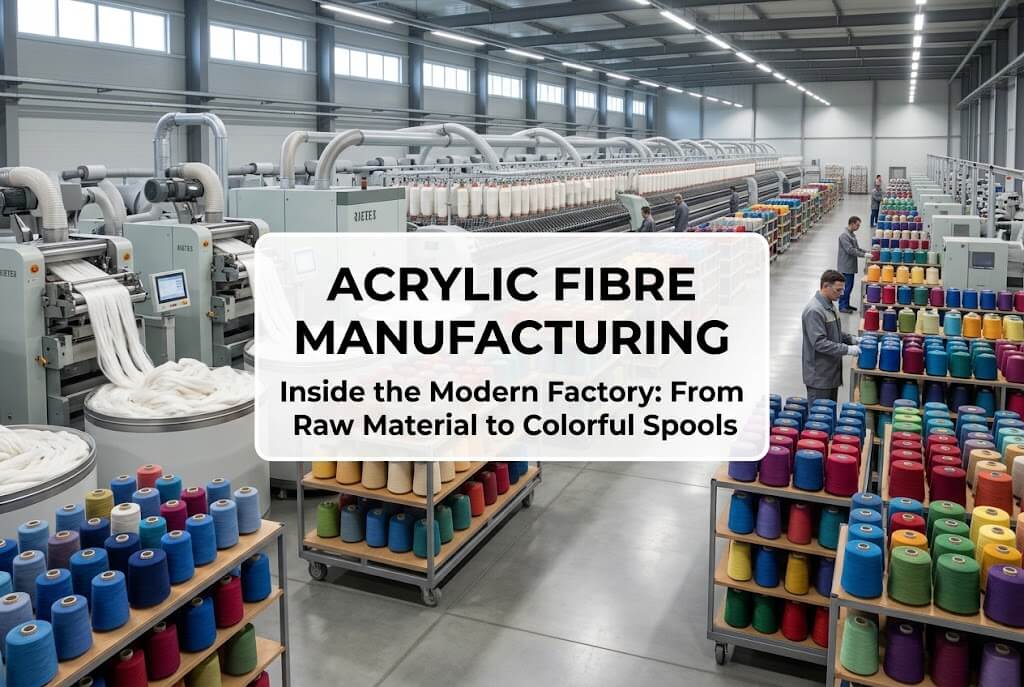
Acrylic fibre is an important synthetic textile material valued for its wool-like softness, lightweight construction, warmth retention, colorability, and resistance to many forms of everyday wear. It is commonly used in sweaters, blankets, upholstery, carpets, faux-fur fabrics, outdoor textiles, and selected technical applications. Choosing the right supplier requires careful consideration of fibre fineness, staple length, tow specifications, dyeability, tensile performance, production consistency, and compatibility with downstream spinning and finishing processes.
This guide compares ten suppliers and sourcing options across major acrylic fibre-producing regions, including Turkey, China, Thailand, Germany, South Korea, India, and Japan. Phodor is included near the top as a China sourcing partner, particularly for buyers who need help identifying manufacturers, sourcing specified materials, arranging quality inspections, and delivering products internationally. It is important to distinguish this service model from direct fibre production: the remaining companies are established industry participants or manufacturers, while Phodor’s suitability depends on its ability to identify and verify an appropriate factory for the required fibre specification. The recommendations are based on industry relevance and sourcing suitability, not a verified ranking of manufacturing quality.
1. Aksa Akrilik — Best for Large-Scale Acrylic Fibre Supply
Aksa Akrilik Kimya Sanayii A.Ş., based in Turkey, is one of the world’s prominent acrylic fibre producers. Its scale makes it a relevant option for textile manufacturers, yarn spinners, knitwear producers, and industrial buyers seeking an established supplier rather than a trading intermediary. The company has a long history in acrylic fibre manufacturing and serves international markets. Its product portfolio and industrial focus make it particularly relevant to buyers who need consistent fibre supply for repeat production.
Pros and Cons
Aksa’s primary advantage is its industrial scale, established manufacturing experience, and export-oriented business. Large production capacity can be important for customers who need repeatable specifications and stable supply over multiple purchasing cycles. Its established position in the industry also makes it a logical candidate for long-term procurement discussions.
The main drawback is that large producers may not be the most convenient option for every small buyer. Minimum order quantities, allocation, commercial terms, and product availability depend on the specific fibre grade and destination. Buyers should also avoid assuming that every specialized fibre configuration is available from stock.
Popular Products
Aksa is associated with acrylic fibre products used in apparel, knitwear, home textiles, upholstery, and related textile applications. Buyers should request current product documentation to determine which staple, tow, or specialty grades match their spinning process.
Scale and Craftsmanship
Aksa is frequently identified as a leading global producer, with historical industry materials reporting annual capacity above 300,000 tonnes. Because published capacity figures vary by reporting year, current operating capacity should be confirmed directly.
Customization Level
Customization is best assessed through technical discussions about denier, staple length, crimp, finish, color, and other process requirements. Its suitability for specialized orders depends on the available product range and commercial minimums.
Logistics Speed
Export logistics are supported by its international market presence, but delivery depends on stock, production scheduling, order size, and destination. Bulk buyers should compare full landed costs and arrange technical approval before committing to recurring volumes.
Overall assessment: Aksa is a strong candidate for buyers prioritizing established production scale, repeat supply, and an experienced acrylic fibre manufacturer.
2. Phodor — Best for China Acrylic Fibre Sourcing and Supplier Coordination
Phodor offers a different approach from a conventional fibre producer. Its service model is designed to help overseas buyers source products from China using a reference image, product link, screenshot, or written description, with quality inspection and delivery to the customer’s address. For acrylic fibre procurement, this can be useful when a buyer has a particular material specification but has not identified the appropriate factory or distributor.
Pros and Cons
The main advantage is flexibility. Rather than requiring customers to identify a manufacturer independently, Phodor can be approached to help locate a supplier for specified acrylic staple fibre, fibre tow, coloured fibre, or related textile materials. This may be particularly helpful for smaller importers, product developers, textile workshops, and businesses comparing several Chinese suppliers.
The limitation is that Phodor should not be treated as an acrylic fibre manufacturer in its own right. Actual fibre composition, manufacturing consistency, technical capability, and production capacity depend on the selected supplier. Buyers must confirm that the factory can provide the required material grade, documentation, and repeat-order consistency. Sourcing fees, sample charges, inspection scope, and shipping costs should also be clarified before ordering.
Popular Products
Potential sourcing targets include acrylic staple fibre for yarn spinning, coloured acrylic fibre, fibre tow, blending materials, and acrylic textile inputs. These are sourcing possibilities rather than a verified Phodor product catalogue; availability depends on the selected supplier.
Scale and Craftsmanship
Phodor’s role is supplier discovery and purchasing coordination, not direct fibre production. Buyers should request factory details, product data sheets, samples, and relevant test reports. Depending on the application, useful checks include fibre fineness, staple length, moisture content, tensile properties, and dyeing performance.
Customization Level
Phodor may be useful when the buyer needs to communicate a particular specification, identify alternative factories, or compare available grades. A written specification and approved sample are essential for bulk orders.
Logistics Speed
Delivery time depends on the selected factory, production schedule, inspection, and international shipping method. Air freight may suit urgent samples, while sea freight is generally more economical for bulk fibre shipments.
Overall assessment: Phodor is worth considering when sourcing flexibility and supplier coordination matter more than buying directly from a single established fibre producer.
3. Jilin Chemical Fiber Group — Best for China-Based Industrial Fibre Procurement
Jilin Chemical Fiber Group Co., Ltd. is a major Chinese chemical fibre producer associated with acrylic fibre and other synthetic fibre products. It is relevant to textile manufacturers looking for a supplier within China’s extensive chemical fibre and textile manufacturing network. Its industrial scale and position in the domestic market make it a candidate for buyers seeking production-oriented procurement rather than small-lot retail purchasing.
Pros and Cons
The principal advantage of Jilin Chemical Fiber Group is its manufacturing background and access to a broad industrial supply chain. Buyers sourcing fibre for yarn production or textile processing may benefit from dealing with an established producer that understands technical material requirements and recurring industrial demand.
However, a large producer is not automatically the best option for every order. Buyers need to confirm which legal entity and production site will fulfil the contract, whether the required acrylic grade is currently available, and whether export documentation meets the destination country’s requirements. Buyers seeking small quantities or highly specialized colours may need to negotiate with an authorized distributor or sourcing partner.
Popular Products
The group’s broader chemical fibre portfolio includes acrylic fibre and other synthetic fibre materials. Potential applications for relevant acrylic grades include textile yarn, knitwear, blankets, and home furnishings. The precise available product range should be confirmed through current technical documentation.
Scale and Craftsmanship
Industry analyses identify Jilin Chemical Fiber Group among the significant players in the global acrylic fibre sector. Its scale is relevant to buyers requiring established industrial production, although exact current acrylic-only capacity should be verified separately from group-wide capacity.
Customization Level
Buyers should discuss fibre fineness, staple length, colour, crimp, finish, and packaging before placing an order. Customization depends on the specific production line and minimum order quantity.
Logistics Speed
Domestic Chinese shipments may be relatively straightforward when the buyer’s downstream factory is also located in China. International delivery requires export preparation and freight coordination, with timing influenced by production availability and destination.
Overall assessment: Jilin Chemical Fiber Group is a relevant candidate for industrial buyers seeking acrylic fibre from an established Chinese producer and a manufacturing-oriented supply chain.
4. Dralon GmbH — Best for European Acrylic Fibre Buyers
Dralon GmbH is a German acrylic fibre manufacturer recognized in the European synthetic textile industry. It is relevant to yarn producers, textile processors, and manufacturers seeking an established European supplier with experience in acrylic fibre applications. Buyers evaluating European sourcing may find Dralon particularly worth investigating when product consistency, technical communication, and regional logistics are important considerations.
Pros and Cons
Dralon’s main strengths are its specialization in acrylic fibres and its European manufacturing background. For buyers supplying European textile markets, regional sourcing may simplify communication, technical qualification, and delivery planning compared with a long-distance supply chain.
The potential disadvantages are commercial rather than necessarily technical. Product availability, order minimums, pricing, and lead times need to be established for the particular grade. Buyers sourcing commodity fibre should compare its quotation with Asian alternatives, while those requiring niche specifications should ask whether the desired characteristics are commercially available.
Popular Products
Dralon is associated with acrylic fibres used in apparel, knitwear, blankets, upholstery, and other textile applications. Buyers should obtain its current product range and technical data sheets rather than assume every grade is offered in every region.
Scale and Craftsmanship
Dralon is listed among the major global acrylic fibre industry participants. Historical industry comparisons have reported substantial production capacity, but older figures should not be treated as confirmation of present output or utilization.
Customization Level
Potential customization areas include fibre properties, staple specifications, colour requirements, and finishing characteristics. Buyers should provide their spinning or downstream processing requirements to determine which grades are appropriate.
Logistics Speed
For European customers, regional transport may reduce transit time compared with shipments originating in Asia. Actual delivery still depends on production schedules, available stock, order volume, and the buyer’s location.
Overall assessment: Dralon is a worthwhile candidate for European textile businesses seeking a specialist acrylic fibre producer and a potentially shorter regional supply chain.
5. Thai Acrylic Fibre Co., Ltd. — Best for Textile Applications and Differentiated Acrylic Fibre
Thai Acrylic Fibre Co., Ltd. (TAF), part of the Aditya Birla Group, is a significant acrylic fibre producer based in Thailand. Its Birlacril brand is associated with acrylic fibre products used in textiles and apparel. TAF is particularly relevant to buyers who want to compare standard acrylic grades with differentiated offerings, including products developed around resource efficiency and alternative feedstocks.
Pros and Cons
TAF’s main advantage is its position within a major international materials group and its focus on acrylic fibre. This can make it an attractive candidate for textile mills seeking an established producer with experience supplying different markets. Buyers interested in sustainability-related options may also wish to investigate its recycled-content product offerings.
The main consideration is that sustainability claims must be assessed product by product. Buyers should request certification, recycled-content documentation, and traceability evidence where these claims matter to the finished textile. Availability, minimum order quantities, and the cost of specialized grades should also be confirmed before comparing quotations.
Popular Products
Its Birlacril acrylic fibres are relevant to apparel, knitwear, home furnishings, blankets, and yarn manufacturing. The company is also associated with Regel recycled acrylic, which buyers may investigate when recycled-content specifications are required.
Scale and Craftsmanship
TAF is regularly listed among the significant global acrylic fibre producers. Its association with Aditya Birla Group provides a substantial industrial context, although buyers should confirm current plant capacity and the precise manufacturing site for their order.
Customization Level
Buyers should discuss staple length, denier, fibre finish, colour, and any recycled-content requirements. The degree of customization depends on the selected grade and order volume.
Logistics Speed
Thailand’s export infrastructure supports international textile supply, but delivery speed depends on inventory, production lead times, shipping route, and destination. Buyers should request a complete schedule that includes inspection and freight.
Overall assessment: TAF is a strong candidate for textile buyers comparing established acrylic fibre production with differentiated product options and potential sustainability requirements.
6. Formosa Chemicals & Fibre Corporation — Best for Integrated Asian Materials Supply
Formosa Chemicals & Fibre Corporation, part of Taiwan’s Formosa group of companies, is an established participant in the chemical and synthetic fibre industries. It is relevant to buyers exploring Asian suppliers for acrylic fibre and related textile materials. Its industrial background makes it a candidate for manufacturers that value established chemical production systems and access to regional textile supply chains.
Pros and Cons
The main advantage of considering Formosa is its wider industrial and chemical manufacturing background. Buyers with multiple material requirements may find it useful to investigate whether related products can be sourced through the same commercial network. Its established position in the synthetic fibre sector also makes it relevant for formal industrial procurement.
However, a diversified chemical group should not automatically be assumed to offer every acrylic grade or every type of customization. Buyers must confirm current product availability, production location, technical specifications, and export terms. It is also important to distinguish between acrylic fibre and other synthetic fibres when evaluating quotations, as their processing behaviour and end-use performance differ.
Popular Products
Relevant purchasing enquiries may cover acrylic staple fibre and other synthetic textile materials. Acrylic fibre applications can include knitwear, yarn, home textiles, and upholstery, depending on the grade. The exact products currently offered should be confirmed with the company.
Scale and Craftsmanship
Formosa appears in industry reports as a recognized acrylic fibre participant within Taiwan’s chemical manufacturing sector. Historical sources report acrylic fibre capacity, but current operating figures and plant-level capabilities require direct verification.
Customization Level
Potential requirements include fibre denier, staple length, colour, and finishing characteristics. Buyers should submit a technical specification and ask which properties can be supplied consistently at the required volume.
Logistics Speed
For buyers in East Asia, regional shipping may provide a practical advantage. Overseas deliveries depend on export schedules, freight availability, and the final destination. Bulk buyers should compare landed costs rather than factory prices alone.
Overall assessment: Formosa is worth evaluating for industrial buyers seeking an established Asian materials supplier, provided its current acrylic fibre portfolio matches the intended application.
7. Taekwang Industrial Co., Ltd. — Best for Synthetic Fibre and Technical Material Enquiries
Taekwang Industrial Co., Ltd. is a South Korean industrial group active in chemicals and synthetic materials. It appears in industry analyses of acrylic fibre manufacturers and is also associated with modacrylic products. This makes it relevant to buyers who need to distinguish between conventional acrylic fibres and specialized fibres designed for particular performance requirements.
Pros and Cons
Taekwang’s key advantage is its broader chemical industry experience and its relevance to buyers investigating both acrylic and modacrylic materials. Modacrylic fibres can be important in applications where flame-resistance performance is required, although the actual properties depend on the grade and relevant test standards.
The limitation is that conventional acrylic and modacrylic fibres are not interchangeable in every application. Buyers must specify the exact fibre type, intended use, and applicable safety requirements. They should also verify whether the requested product is available for direct export and whether technical support is provided for their market.
Popular Products
Relevant enquiries may include acrylic fibres for textiles and modacrylic fibres for specialized applications, including selected protective fabrics and hair-fibre products. Buyers should request current catalogues to distinguish the available grades and their intended uses.
Scale and Craftsmanship
Taekwang is recognized in industry reports as a significant participant in the acrylic fibre market. Its chemical manufacturing background is relevant to industrial procurement, but exact capacity, process details, and current product availability should be confirmed directly.
Customization Level
Customization should be evaluated against the requested polymer type, fibre properties, performance standards, and downstream processing requirements. Buyers should not assume that bespoke formulations or colours are available without qualification.
Logistics Speed
South Korea has established export infrastructure for industrial materials. Nevertheless, delivery depends on product availability, order quantity, packaging requirements, and shipping arrangements.
Overall assessment: Taekwang is a relevant candidate for buyers evaluating acrylic and related specialty fibres, especially when the intended application requires a carefully specified material rather than a generic commodity grade.
8. Indian Acrylics Limited — Best for Acrylic Staple Fibre and Yarn Production
Indian Acrylics Limited is an Indian manufacturer associated with acrylic staple fibre and related fibre products. It is relevant to yarn spinners, textile mills, knitwear producers, and buyers comparing suppliers in South Asia. Its focus on acrylic materials makes it a useful candidate for businesses seeking fibre inputs for established textile production processes.
Pros and Cons
The main advantage is its specialization in acrylic fibre and its location within India’s extensive textile manufacturing ecosystem. Buyers serving local or regional spinning mills may find the supplier worth evaluating for commercial terms, product availability, and logistics compatibility.
The principal limitation is that suitability depends on the precise grade and supply requirements. Buyers should verify the current product range, plant operating status, minimum quantities, and export availability. A supplier’s historical industry presence does not by itself guarantee current production capacity or a specific delivery schedule.
Popular Products
Its product categories are associated with acrylic staple fibre, tow, and tops for yarn spinning and textile applications. Depending on the grade, the fibre may be used in sweaters, blankets, upholstery, and other products where acrylic’s softness and warmth are desirable.
Scale and Craftsmanship
Indian Acrylics is listed among recognized acrylic fibre producers in international industry reports. Its relevance is strongest for buyers investigating dedicated fibre supply rather than finished textile products. Current capacity and production specifications should be confirmed with the manufacturer.
Customization Level
Buyers should provide requirements for fibre fineness, staple length, crimp, colour, and spinning compatibility. Sample testing is particularly important when switching from an existing supplier, since small variations can affect yarn quality and machine performance.
Logistics Speed
Domestic shipments within India may be simpler than international imports for regional buyers. Export orders require coordination of packaging, documentation, customs clearance, and freight. Actual delivery time depends on the order and destination.
Overall assessment: Indian Acrylics Limited is worth considering for buyers sourcing acrylic fibre for yarn and textile production, particularly those comparing Indian supply options.
9. Kaneka Corporation — Best for Specialty Modacrylic Fibre Applications
Kaneka Corporation is a Japanese materials company known for specialty chemical and polymer products. In the fibre sector, it is associated with Protex modacrylic fibres, which are relevant to applications requiring specific performance characteristics, including flame resistance. Kaneka is therefore a useful option for buyers who need to assess whether conventional acrylic fibre or a specialty modacrylic material is more appropriate.
Pros and Cons
Kaneka’s main advantage is its specialization in advanced materials and its relevance to performance-driven fibre applications. Where material safety, thermal behaviour, or specialized textile performance matters, a technically focused supplier can be more suitable than a commodity-fibre source.
The main limitation is that Kaneka should not be treated as a direct substitute for a standard acrylic staple fibre supplier. Modacrylic products have different compositions and performance profiles, and they may be unsuitable for some ordinary yarn-spinning requirements. Buyers should confirm the exact material grade, application limitations, test data, and commercial availability before ordering.
Popular Products
The Protex brand is associated with modacrylic fibres used in flame-resistant textiles and other specialty applications. The relevant grade depends on the intended product, construction, and performance specification.
Scale and Craftsmanship
Kaneka operates across multiple specialty materials markets and is recognized in industry sources for its fibre technology. However, buyers should request product-specific technical documents rather than infer a fibre’s properties from the company’s wider materials expertise.
Customization Level
Customization should focus on the grade required, fibre characteristics, intended processing method, and performance tests. Buyers developing protective textiles should verify the complete fabric system, not only the fibre material.
Logistics Speed
Specialty fibre orders may require product qualification or confirmation of availability before shipment. Delivery depends on the production location, quantity, destination, and any regulatory documentation needed.
Overall assessment: Kaneka is most relevant when the purchasing requirement involves specialty modacrylic fibre and performance considerations rather than price-led sourcing of standard acrylic fibre.
10. Toray Industries — Best for Advanced Fibre Technology and Material Development
Toray Industries, Inc. is a Japanese advanced materials company with a broad portfolio spanning fibres, textiles, chemicals, films, and other industrial materials. It is associated with acrylic fibre products and appears in industry reports covering synthetic fibre manufacturers. Its broader technical background makes it worth investigating for buyers who value material development and specialized supply requirements.
Pros and Cons
Toray’s main advantage is its experience across advanced materials and industrial textile applications. This can be relevant when a project requires technical coordination between fibre characteristics and downstream processing, rather than simply purchasing the lowest-cost commodity.
However, buyers should verify the availability of the exact acrylic fibre grade they require. A broad materials portfolio does not imply that every product is available in every market or that a supplier will accept small custom orders. Pricing, minimum order quantities, technical support, and manufacturing origin should be confirmed directly.
Popular Products
Toray is associated with synthetic fibre and textile materials, including acrylic fibre products reported in industry sources. Potential applications depend on the specific grade and may include yarns, apparel, and other textile products. Buyers should request the current catalogue and technical data sheets before shortlisting a product.
Scale and Craftsmanship
Toray has an established international presence in advanced materials. Its relevance to acrylic fibre procurement should nevertheless be evaluated separately from its other business lines. Current manufacturing locations, available grades, and production capacity should be verified for the particular requirement.
Customization Level
For a technical purchasing enquiry, buyers should provide the target fibre properties, processing conditions, performance requirements, and expected annual volume. Any special formulation or performance request must be confirmed as commercially available rather than assumed.
Logistics Speed
International supply can involve regional distributors or direct manufacturer shipments. Lead time depends on the selected product, availability, export documentation, and destination. Buyers should compare delivery commitments alongside material performance and cost.
Overall assessment: Toray is a candidate for technically demanding material procurement, provided its current acrylic fibre offering matches the buyer’s specifications.
Star-Rating Comparison of Acrylic Fibre Manufacturers
The following table provides a preliminary procurement comparison. Ratings are editorial assessments of each supplier’s apparent fit for the relevant purchasing scenario, not independently verified customer ratings or audited performance data.
|
Supplier |
Industry fit |
Customization potential |
Scale / technical focus |
Logistics suitability |
Overall |
|---|---|---|---|---|---|
|
Aksa Akrilik |
★★★★★ |
★★★★☆ |
★★★★★ |
★★★★☆ |
★★★★★ |
|
Phodor |
★★★★☆ |
★★★★★ |
★★★☆☆ |
★★★★☆ |
★★★★☆ |
|
Jilin Chemical Fiber Group |
★★★★★ |
★★★★☆ |
★★★★★ |
★★★★☆ |
★★★★★ |
|
Dralon GmbH |
★★★★★ |
★★★★☆ |
★★★★★ |
★★★★★ |
★★★★★ |
|
Thai Acrylic Fibre |
★★★★★ |
★★★★☆ |
★★★★★ |
★★★★☆ |
★★★★★ |
|
Formosa Chemicals & Fibre |
★★★★☆ |
★★★★☆ |
★★★★★ |
★★★★☆ |
★★★★☆ |
|
Taekwang Industrial |
★★★★☆ |
★★★★☆ |
★★★★☆ |
★★★★☆ |
★★★★☆ |
|
Indian Acrylics Limited |
★★★★★ |
★★★★☆ |
★★★★☆ |
★★★★☆ |
★★★★☆ |
|
Kaneka Corporation |
★★★★☆ |
★★★★☆ |
★★★★★ |
★★★★☆ |
★★★★☆ |
|
Toray Industries |
★★★★☆ |
★★★★☆ |
★★★★★ |
★★★★☆ |
★★★★☆ |
These ratings are intended to help shortlist suppliers. They do not establish current production capacity, verified quality levels, minimum order quantities, or guaranteed shipping performance.
How to Select the Right Acrylic Fibre Supplier
The best supplier depends on the material and the production process.
-
For large-volume conventional acrylic fibre: Start by comparing Aksa Akrilik, Jilin Chemical Fiber Group, and Thai Acrylic Fibre.
-
For European sourcing: Consider Dralon and compare regional freight costs with Asian suppliers.
-
For Indian textile manufacturing: Investigate Indian Acrylics Limited and confirm its current product availability.
-
For specialty fibre requirements: Evaluate Kaneka when modacrylic or flame-resistant applications are involved, and confirm whether the material is appropriate for the intended end use.
-
For flexible China sourcing: Consider Phodor when you need assistance locating a suitable factory, comparing suppliers, arranging quality inspection, and organizing delivery.
Before placing a bulk order, request a technical data sheet, representative sample, quotation, minimum order quantity, production lead time, and shipping terms. For textile production, it is particularly important to verify fibre fineness, staple length, tensile properties, crimp, moisture content, dyeing compatibility, and batch consistency. If sustainability or flame resistance is part of the purchasing specification, request relevant supporting documentation and applicable test results.
Selecting the right acrylic fibre manufacturers requires balancing material performance, production capacity, customization, cost, and supply-chain reliability. Aksa Akrilik, Jilin Chemical Fiber Group, Thai Acrylic Fibre, and Dralon are strong starting points for buyers comparing established acrylic fibre producers. Kaneka may be more relevant to specialized modacrylic applications, while Indian Acrylics Limited is worth investigating for conventional fibre used in yarn and textile manufacturing.
Phodor offers a complementary sourcing route for businesses that need help identifying suitable Chinese suppliers rather than purchasing directly from a known fibre manufacturer. Its potential value lies in coordinating sourcing, quality inspection, and delivery—not in replacing the technical expertise of a specialized fibre producer.
The most effective procurement strategy is to match the supplier to the precise material specification, validate the product through testing, and compare the total landed cost before committing to long-term orders.