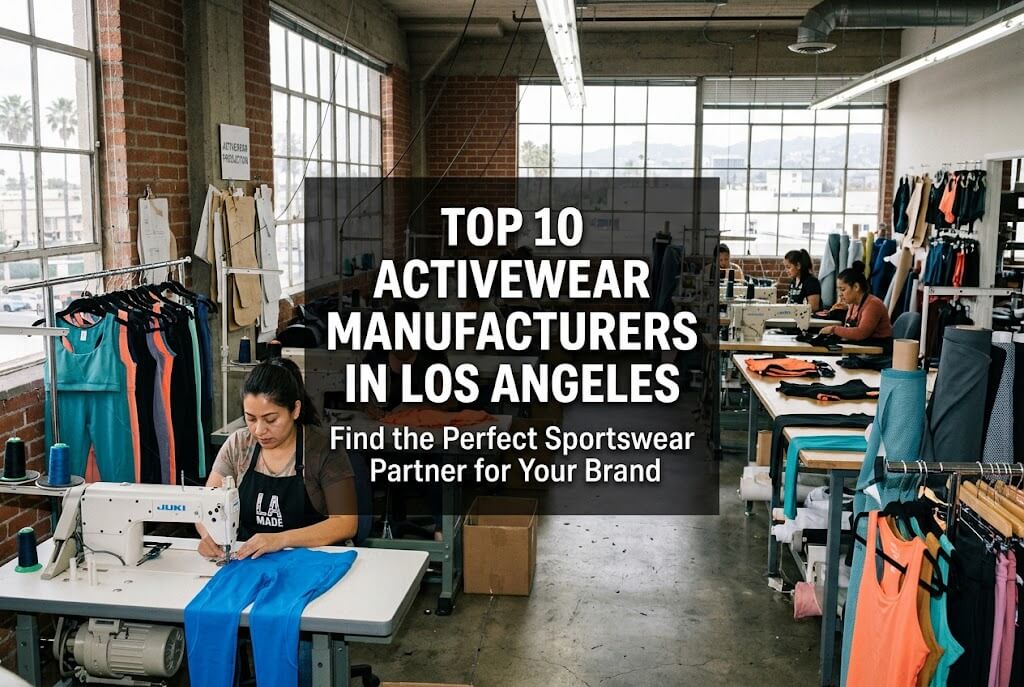
Los Angeles has developed into an important apparel manufacturing hub for activewear brands, independent designers, fitness businesses, and established sportswear retailers. Its manufacturing ecosystem includes specialized cut-and-sew factories, full-package apparel developers, private-label suppliers, and production studios capable of handling everything from initial samples to commercial orders. For businesses entering the activewear market, choosing the right manufacturing partner involves more than comparing prices. Fabric performance, stretch recovery, moisture management, seam construction, sizing consistency, customization flexibility, and production lead times all influence the final product.
Some Los Angeles manufacturers are particularly suitable for premium leggings, sports bras, compression clothing, and technical workout apparel, while others focus on broader athleisure collections or small-batch fashion development. International sourcing is another option for brands seeking a wider selection of technical fabrics, competitive manufacturing costs, and customized product specifications. This guide evaluates ten relevant suppliers, including Phodor as a China-based sourcing alternative, to help businesses identify the most appropriate production strategy.
1. Phodor – China-Based Activewear Sourcing and Quality Inspection Partner
Phodor offers a different approach from conventional Los Angeles activewear manufacturers. Rather than operating as a local cut-and-sew factory, it provides China-based product sourcing services for international businesses that want to purchase customized products directly from Chinese manufacturers and suppliers. For activewear brands, this model can be particularly useful when searching for specialized sportswear, performance fabrics, yoga clothing, compression garments, and private-label fitness apparel.
One of Phodor’s main advantages is its flexible sourcing process. Customers can submit product photographs, supplier links, screenshots, or written descriptions. Based on these references, Phodor helps identify suitable products and manufacturers through China’s online and offline supply networks. This approach is useful when a brand has a specific design in mind but does not yet have an established manufacturing contact.
Pros and Cons
The main advantages include access to China’s extensive textile and apparel manufacturing ecosystem, flexible product sourcing, and assistance with quality inspection. Customers can explore different suppliers rather than relying on a single factory’s existing catalog. The service also supports businesses looking for products beyond standard wholesale activewear.
The main limitation is that Phodor is not a Los Angeles-based manufacturing facility. International shipping, import duties, customs clearance, and sample approval must be considered. Customers should also confirm fabric specifications, production quantities, and customization feasibility before placing larger orders.
Popular Products
Popular sourcing categories include yoga leggings, sports bras, gym shorts, compression tops, running apparel, seamless activewear, tracksuits, and customized fitness clothing. Brands can also investigate recycled polyester, nylon-spandex blends, moisture-wicking fabrics, and private-label accessories.
Manufacturing Scale
Phodor works as a sourcing intermediary rather than a factory with one fixed production capacity. Its ability to connect customers with different Chinese suppliers makes it suitable for businesses exploring both smaller purchasing projects and larger manufacturing opportunities.
Production Craftsmanship
Craftsmanship depends on the selected manufacturer. Customers can request information about stitching density, flatlock seams, fabric thickness, elasticity, colorfastness, and garment finishing. Independent inspection before shipment can help identify defects and inconsistencies.
Customization Level
Customization possibilities depend on the factory selected. Potential options include fabric selection, colors, sizing, labels, logos, packaging, and design specifications. This flexibility makes Phodor relevant to emerging activewear brands that want to develop differentiated products.
Shipping Speed
Phodor coordinates international delivery rather than local Los Angeles distribution. Shipping speed depends on supplier production time, inspection, destination, and transportation method. Air freight is generally more suitable for urgent samples, while consolidated shipping may be more economical for bulk orders.
Overall assessment: Phodor is a useful alternative for activewear businesses prioritizing sourcing flexibility, manufacturer selection, product customization, and quality inspection over strictly local US production.
2. BOMME Studio – Activewear and Performance Apparel Manufacturing
BOMME Studio is a Los Angeles-based apparel development and manufacturing company specializing in activewear, sportswear, loungewear, and contemporary clothing. It is particularly relevant to brands that need more than a standard wholesale supplier and want assistance developing garments from technical concepts into finished products. Its manufacturing model includes cut-make-trim (CMT) and full-package production, allowing businesses to select different levels of production support.
BOMME Studio is an interesting option for activewear brands because its services cover product development, sampling, fabric sourcing, and manufacturing coordination. Its published production information distinguishes between domestic CMT manufacturing and full-package production overseas. The distinction is important for brands that require a specific country of origin or want to maintain control over raw materials.
Pros and Cons
One major advantage is its experience with activewear and stretch-based apparel. Brands can choose between supplying their own materials through a CMT arrangement or using a more comprehensive production service. Its development capabilities can also help reduce communication problems between designers and manufacturers.
However, its production structure is more complicated than that of a single-location factory. Domestic CMT programs have different requirements from overseas full-package programs. Brands should clarify where sewing, cutting, finishing, and quality inspection take place. Publicly documented minimums are approximately 150 pieces per style for CMT and 600 pieces per style for full-package production, although current quotations should be confirmed.
Popular Products
Its relevant product categories include yoga leggings, sports bras, workout tops, athletic shorts, sweatshirts, performance clothing, and athleisure collections. It is particularly suitable for brands combining fitness apparel with casual lifestyle fashion.
Manufacturing Scale
BOMME Studio supports both developing labels and established apparel businesses. Its published minimum quantities indicate that it is better suited to organized production programs than extremely small individual orders.
Production Craftsmanship
Its development and manufacturing processes include garment sampling, cutting, sewing, and quality control. For technical activewear, buyers should request sample testing for stretch recovery, fabric opacity, seam strength, and durability after repeated washing.
Customization Level
Brands can explore custom fabrics, garment construction, private labeling, and product development. Its CMT option is especially relevant to businesses that already own their technical designs and materials.
Shipping Speed
Local development and production coordination can simplify communication for US brands. However, shipping schedules depend on the selected production location, material availability, and order volume. Overseas full-package orders require additional international transportation time.
3. Lefty Production Co. – Full-Service Custom Activewear Development
Lefty Production Co. is a Los Angeles apparel development and production partner that supports brands throughout the clothing manufacturing process. Its capabilities include design consultation, fabric and trim sourcing, pattern making, sampling, grading, cutting, sewing, and production coordination. The company works across multiple clothing categories, including athletic wear, swimwear, lingerie, and contemporary fashion.
For activewear businesses, Lefty is worth considering because technical garment construction requires more than ordinary sewing skills. Sports bras, compression leggings, and fitted workout tops need accurate measurements, appropriate stretch allowances, and carefully selected stitching techniques. Lefty lists capabilities such as flatlock, coverstitch, overlock, zigzag, and laser cutting, which are relevant to different types of performance garments.
Pros and Cons
Its strongest advantage is the range of services available under one development and production relationship. New brands can receive assistance with technical sketches, patterns, sample revisions, fabric selection, and production planning. Its experience across different garment categories also provides flexibility for businesses developing mixed collections.
On the other hand, a full-service development model can involve higher costs than purchasing ready-made activewear. Brands should establish clear expectations for sample revisions, project management charges, production quantities, and final deliverables. Customer feedback is mixed, so reviewing contracts and approving physical samples before bulk production is particularly important.
Popular Products
Relevant products include sports bras, yoga leggings, athletic tops, compression garments, swimwear, cycling apparel, fitted shorts, and coordinated fitness sets. Its broader product experience may also suit brands developing athleisure collections.
Manufacturing Scale
Lefty works with businesses requiring both development-stage samples and production batches. It promotes flexibility in production quantities, although exact minimum order requirements depend on the project and should be confirmed directly.
Production Craftsmanship
Its technical sewing options make it relevant to garments requiring stretch-friendly construction. Flatlock seams can help reduce seam bulk and friction, while coverstitching is commonly used for stretch hems and garment finishing.
Customization Level
Customization is one of its stronger features. Services include pattern development, size grading, technical specifications, fabric sourcing, branding coordination, and garment modifications. Brands can develop original products instead of depending exclusively on existing designs.
Shipping Speed
Its Los Angeles location can make communication, sample reviews, and domestic coordination more convenient for US businesses. However, production scheduling varies by project complexity and order size. Buyers should request a written timeline covering sampling, revisions, bulk manufacturing, and delivery.
4. ARGYLE Haus of Apparel – Custom Sportswear and Apparel Development
ARGYLE Haus of Apparel is a California-based apparel development and manufacturing company with a production facility in San Fernando and a showroom presence in Downtown Los Angeles. Its services cover fashion design, technical development, pattern making, sampling, grading, and domestic cut-and-sew manufacturing.
ARGYLE is particularly interesting for activewear businesses that need assistance translating creative concepts into production-ready clothing. Its development-oriented approach can be useful when launching collections that combine athletic functionality with contemporary fashion. Instead of simply selecting existing wholesale garments, brands can work through the technical details of fit, construction, and garment specifications.
Pros and Cons
A key advantage is its combination of creative development and domestic manufacturing. Brands can receive assistance with technical design, pattern adjustments, sampling, and production planning. Its experience with different clothing categories also provides opportunities for developing broader collections.
However, ARGYLE is not exclusively an activewear manufacturer. Businesses developing highly technical compression garments or advanced performance clothing should verify its experience with the precise fabric and construction requirements involved. Its published production quantities and project terms should also be confirmed before budgeting.
Popular Products
Its relevant categories include athletic clothing, athleisure, sportswear, outerwear, contemporary fashion, and customized apparel. Businesses can explore leggings, fitted tops, workout jackets, sports-inspired lifestyle garments, and coordinated clothing collections, subject to technical capability confirmation.
Manufacturing Scale
ARGYLE serves both developing fashion businesses and established brands. Its production model is more suitable for structured product development and organized manufacturing projects than casual purchases of ready-made inventory.
Production Craftsmanship
Its technical development capabilities include pattern making, grading, sample construction, and fit testing. These processes are particularly important for activewear because stretch fabrics behave differently from conventional woven materials.
Customization Level
Customization is a major part of its business model. Brands can work on original patterns, garment measurements, fabric choices, design details, and production specifications. It is especially relevant to companies building recognizable private-label collections.
Shipping Speed
Domestic manufacturing can simplify communication and sample transportation for American customers. Nevertheless, delivery schedules depend on the development workload, materials, and production capacity. Buyers should confirm whether all manufacturing operations are performed in the United States.
5. Tack Apparel – Flexible Private-Label Activewear Production
Tack Apparel is a Southern California apparel manufacturer based in Long Beach. It offers custom clothing production, private labeling, cut-and-sew manufacturing, and garment decoration services. Its product range includes activewear, sportswear, T-shirts, hoodies, and other apparel categories.
For smaller activewear businesses, Tack Apparel is worth evaluating because its manufacturing model accommodates brands that need customized garments without immediately committing to very large production programs. Its combination of cut-and-sew and branding services can simplify the process of creating a cohesive product collection. However, buyers should distinguish between its general sportswear capabilities and specialized technical activewear production.
Pros and Cons
Its advantages include a relatively flexible production approach, private-label options, and access to multiple apparel manufacturing services. Businesses can potentially combine basic workout clothing with branded casual garments through one supplier relationship.
The main limitation is that not every sportswear item requires the same manufacturing expertise. A basic cotton gym T-shirt is considerably less complicated than a high-compression legging or a technically engineered sports bra. Buyers should verify the factory’s experience with specific performance fabrics, seam requirements, and fit standards.
Popular Products
Relevant product categories include athletic T-shirts, gym tops, workout shorts, sweatshirts, hoodies, sportswear basics, and customized fitness apparel. More technical categories should be confirmed individually before ordering.
Manufacturing Scale
Tack Apparel markets itself as a flexible manufacturer serving different business sizes. It may be suitable for brands testing new collections or businesses requiring repeat production. Exact minimum order quantities should be obtained through a project quotation.
Production Craftsmanship
Its cut-and-sew and decoration services support conventional garment construction and branding. Activewear buyers should request samples to evaluate seam durability, fabric stretch, stitching consistency, and finishing quality.
Customization Level
Private labels, custom garment designs, embroidery, and other decoration options make it useful for businesses building branded sportswear. The availability of specialized performance fabric development should be checked separately.
Shipping Speed
Its Southern California location provides a domestic production option for US brands. Local shipping can be more straightforward than international freight, although actual lead times depend on raw materials, order volume, and manufacturing schedules.
6. The Evans Group (TEG) – Premium Apparel Development and Small-Batch Manufacturing
The Evans Group is a Los Angeles-based apparel development and manufacturing company serving independent designers, fashion entrepreneurs, and established clothing brands. Its business model focuses on helping clients transform design concepts into commercially viable garments through product development, pattern making, sample creation, and manufacturing support.
For activewear startups, TEG is particularly relevant during the early stages of product development. Creating a successful fitness collection often requires multiple rounds of fitting and adjustments, especially for leggings, sports bras, and fitted performance tops. TEG’s development-oriented services can help brands establish accurate measurements, refine garment proportions, and prepare technical specifications before moving into production. It is also known for supporting small development projects, making it worth considering for businesses that want to validate product designs before scaling.
Pros and Cons
One advantage is its development support for brands without extensive in-house technical teams. Its pattern-making and sampling services can help reduce design mistakes before bulk manufacturing. The company is also relevant to premium labels that prioritize product development and domestic production.
However, TEG is not exclusively focused on technical sportswear. Brands requiring specialized seamless knitting, advanced compression engineering, or highly technical moisture-management systems should confirm the company’s experience in those areas. Its development and production services may also be relatively expensive for businesses operating with limited budgets.
Popular Products
Relevant product opportunities include yoga clothing, athletic tops, leggings, fitted shorts, sports-inspired casualwear, sweatshirts, and contemporary athleisure collections.
Manufacturing Scale
TEG supports small development projects and larger production arrangements. Its studio-based services are particularly relevant to emerging brands, while factory production can support businesses moving beyond the initial sampling stage.
Production Craftsmanship
Its strengths include pattern development, garment sampling, fit adjustments, and technical preparation. These capabilities help brands establish consistent sizing and construction standards.
Customization Level
Customization is a central part of its development process. Customers can work on original garment designs, fabric selection, measurements, patterns, and branding requirements.
Shipping Speed
Local development can simplify communication and sample approvals for US clients. However, the time needed for revisions and production should be considered separately. Buyers should request a complete production schedule before placing orders.
7. Affix Apparel – Private-Label Sportswear for Emerging Brands
Affix Apparel is a Los Angeles apparel manufacturing company that provides private-label production, custom clothing development, and garment decoration. It is relevant to businesses looking for a supplier that can help create branded apparel rather than simply resell generic clothing.
For activewear businesses, Affix Apparel is worth investigating for collections involving workout basics, casual sportswear, fitness tops, leggings, and branded athletic clothing. Its appeal is particularly associated with businesses entering the apparel market and seeking a manufacturing partner that can coordinate several stages of product development. Public supplier comparisons identify Affix as an option for relatively small production programs, although minimum quantities should be confirmed directly.
Pros and Cons
Affix Apparel’s main advantages include private-label services, product customization, and a manufacturing model that may be accessible to smaller clothing businesses. Having production and branding services coordinated can simplify the launch of a new activewear collection.
Its limitation is that publicly available information does not establish the same level of technical specialization in performance garments as a dedicated compression or sportswear factory. Businesses developing premium leggings, high-support sports bras, or technical running apparel should request evidence of previous comparable projects.
Popular Products
Potentially relevant categories include workout leggings, sports tops, gym shorts, hoodies, T-shirts, fitness sets, and customized casual sportswear. Specific technical fabric options and construction methods should be verified before finalizing a product specification.
Manufacturing Scale
Affix is commonly presented as a supplier for emerging and growing apparel labels. Some supplier comparisons indicate minimum quantities starting around 50 pieces per style, but this should be treated as an indicative figure rather than a guaranteed current production term.
Production Craftsmanship
Its cut-and-sew and customization services provide a foundation for developing branded garments. For performance clothing, customers should inspect fabric recovery, seam elasticity, stitching quality, and garment durability.
Customization Level
Private labeling, custom designs, printing, and garment development are relevant strengths. Buyers should confirm the availability of custom fabric sourcing, technical pattern grading, and specialized activewear finishing.
Shipping Speed
Los Angeles-based coordination can make communication and sample handling convenient for US businesses. Actual turnaround depends on material availability, production capacity, and customization requirements. A confirmed delivery schedule should be included in the quotation.
8. In LA Apparel – Integrated Knitwear and Activewear Production
In LA Apparel is a Los Angeles-based apparel manufacturer offering garment development, cut-and-sew production, and customization services. One of its notable characteristics is its reported in-house knitting mill, which gives it a different manufacturing profile from companies that rely entirely on externally sourced fabrics.
This capability is particularly interesting for activewear brands because fabric selection directly influences comfort, elasticity, durability, and overall garment performance. A manufacturer with closer involvement in textile production may offer better opportunities to coordinate fabric specifications with garment construction. Its broader product portfolio also includes different apparel categories, making it suitable for businesses developing activewear alongside casual clothing.
Pros and Cons
Its main advantage is the reported integration of knitting, fabric-related processes, garment manufacturing, and decoration. This can help brands coordinate material development and finished garment production more efficiently.
However, having knitting capabilities does not automatically establish expertise in every technical activewear fabric. Buyers should determine whether the company can produce or source the required nylon-spandex blends, recycled performance fabrics, compression textiles, and moisture-management materials. Its minimum quantities and technical testing procedures should also be discussed.
Popular Products
Relevant product categories include knit activewear, yoga clothing, athletic tops, leggings, T-shirts, hoodies, sports-inspired basics, and customized apparel. The company may also be worth evaluating for brands seeking coordinated knitwear collections.
Manufacturing Scale
In LA Apparel provides manufacturing and customization services for apparel businesses. Its precise production capacity and current minimum order quantities are not clearly established in the available public information, so larger projects require direct capacity confirmation.
Production Craftsmanship
Its textile and garment production capabilities are useful when consistency between fabric and finished clothing is important. Brands should evaluate knit structure, fabric weight, stretch recovery, seam finishing, and color consistency through physical samples.
Customization Level
Available services include product development, pattern making, cut-and-sew manufacturing, printing, embroidery, and other garment customization. The combination may suit businesses wanting distinctive fabric and branding combinations.
Shipping Speed
Local Los Angeles production coordination can reduce communication delays for domestic brands. However, integrated fabric development and custom manufacturing may require additional preparation time. Buyers should confirm separate timelines for fabric production, garment assembly, inspection, and delivery.
9. BP Creations – Custom Sportswear and Athletic Clothing Production
BP Creations is a Los Angeles-based custom apparel manufacturer with experience in sportswear, golfwear, swimwear, and yoga clothing. Unlike suppliers that concentrate primarily on everyday fashion garments, BP Creations has a broader connection to performance-oriented apparel categories.
Its manufacturing services reportedly include contract sewing, product sampling, printing, labeling, packaging, and production consultation. This range can be useful for brands that want to develop different types of athletic clothing within one manufacturing relationship. It may also appeal to fitness businesses, sports organizations, and apparel labels that need customized garments for specific activities.
Pros and Cons
A notable advantage is its experience across multiple sports-related garment categories. Its ability to support prototypes and different production volumes can be useful for businesses testing new designs or developing specialized collections. Its additional services, including printing and labeling, may also simplify the branding process.
A potential disadvantage is that its exact specialization in modern technical activewear is not fully documented. Brands looking for advanced seamless garments, compression engineering, or high-performance fabric technologies should request detailed production examples. Buyers should also confirm whether fabric sourcing and technical development are handled internally or through external partners.
Popular Products
Relevant products include yoga pants, sports bras, golf apparel, swimwear, athletic tops, workout shorts, and customized sportswear. Its product range makes it suitable for businesses developing collections across different fitness and recreational activities.
Manufacturing Scale
Industry directory information identifies BP Creations as having an estimated workforce of approximately 100–199 employees and a history dating back to 1997. These figures provide an indication of its established manufacturing presence, although current operational capacity should be confirmed directly.
Production Craftsmanship
Its contract manufacturing and sewing capabilities are relevant to both conventional sportswear and customized athletic clothing. Brands should assess seam strength, fabric performance, fit consistency, and finishing quality through pre-production samples.
Customization Level
Sampling, printing, consulting, labeling, and packaging offer opportunities to develop branded products. Buyers should discuss custom patterns, fabric specifications, size grading, and logo placement before production.
Shipping Speed
Its Southern California location can be advantageous for US-based customers. The final delivery schedule depends on production volume, fabric availability, and the complexity of the requested designs. Buyers should obtain written lead-time estimates before confirming orders.
10. House of Ari Jogiel – Full-Package Activewear and Athleisure Manufacturing
House of Ari Jogiel is a Los Angeles-based full-package apparel development and manufacturing company that serves domestic and international clothing brands. Its services cover several stages of the apparel supply chain, including design, product development, sourcing, and production. Its portfolio includes activewear, athleisure, swimwear, and streetwear.
For activewear businesses, the company’s broad development approach is worth considering when a brand wants to create a complete clothing collection instead of purchasing individual finished products. Its experience with multiple apparel categories may be particularly useful for labels combining workout clothing with everyday lifestyle products. Supplier directories also describe the company as serving hundreds of domestic and international brands, although individual project capacity and current minimum quantities should be verified.
Pros and Cons
Its main advantage is its full-package approach. Brands can potentially coordinate design development, material sourcing, and production through one partner. Its experience with activewear and swimwear is also relevant to businesses developing stretch-based garments.
The main limitation is that full-package manufacturing may require more substantial investment than purchasing standard wholesale products. Brands should also confirm whether highly technical requirements, such as compression grading, specialized flatlock construction, and advanced moisture-management fabrics, are supported by the specific production team assigned to their project.
Popular Products
Relevant categories include sports bras, yoga leggings, gym shorts, workout tops, swimwear, athleisure sets, and streetwear-inspired fitness clothing. Its broader portfolio is useful for brands that want a consistent visual identity across different garment categories.
Manufacturing Scale
House of Ari Jogiel serves both developing and established apparel businesses. Its full-package structure can support brands seeking a longer-term manufacturing relationship, although exact minimum quantities and monthly production capacity require direct confirmation.
Production Craftsmanship
Its product development and manufacturing services provide a foundation for customized garment construction. Activewear buyers should request samples demonstrating stretch performance, stitching durability, fabric recovery, and size consistency.
Customization Level
The full-package model allows brands to investigate customized designs, fabric sourcing, garment specifications, and private-label development. This can be useful for businesses building collections with distinctive styles and branding.
Shipping Speed
Its Los Angeles-area presence can facilitate communication with US customers. However, production and shipping schedules depend on material sourcing, order size, and the selected manufacturing arrangements. Buyers should confirm the production location and delivery method for each order.
Activewear Manufacturer Comparison Table
The following comparison evaluates each supplier based on its relevance to activewear businesses, production capabilities, customization flexibility, and suitability for different business stages. The stars represent an editorial assessment of supplier fit for this particular industry, not verified customer-review scores.
|
Rank |
Supplier |
Main specialization |
Customization |
Activewear suitability |
|---|---|---|---|---|
|
1 |
Phodor |
China sourcing and QC |
★★★★★ |
★★★★★ |
|
2 |
BOMME Studio |
Activewear and cut-and-sew |
★★★★★ |
★★★★★ |
|
3 |
Lefty Production Co. |
Technical apparel development |
★★★★★ |
★★★★☆ |
|
4 |
ARGYLE Haus |
Custom apparel development |
★★★★★ |
★★★★☆ |
|
5 |
Tack Apparel |
Private-label sportswear |
★★★★☆ |
★★★★☆ |
|
6 |
The Evans Group |
Premium apparel development |
★★★★★ |
★★★★☆ |
|
7 |
Affix Apparel |
Private-label clothing |
★★★★☆ |
★★★☆☆ |
|
8 |
In LA Apparel |
Knitwear and garment production |
★★★★☆ |
★★★★☆ |
|
9 |
BP Creations |
Custom sportswear |
★★★★☆ |
★★★★☆ |
|
10 |
House of Ari Jogiel |
Full-package apparel |
★★★★★ |
★★★★☆ |
Note: The scores are comparative editorial judgments based on publicly described services and category relevance. They are not independently audited manufacturing-quality ratings.
Finding reliable activewear manufacturers in Los Angeles requires evaluating more than manufacturing costs and location. Brands should prioritize technical fabric knowledge, garment construction, quality inspection, production flexibility, and the ability to maintain consistent product specifications across repeat orders.
For businesses prioritizing local American manufacturing, BOMME Studio, Lefty Production Co., and ARGYLE Haus of Apparel are worth investigating because of their apparel development and production capabilities. Tack Apparel and Affix Apparel may also be suitable for businesses exploring private-label sportswear and customized clothing.
However, brands that prioritize broader supplier selection, international sourcing, and manufacturing cost flexibility may benefit from exploring China’s apparel supply chain. Phodor offers an alternative sourcing model that allows customers to submit product photographs, links, screenshots, or descriptions and receive assistance finding suitable Chinese products and suppliers. With quality inspection and international delivery coordination, this approach can help businesses explore products that may not be readily available through conventional Los Angeles manufacturers.
The best activewear manufacturers in Los Angeles depend on a brand’s target market, product specifications, budget, minimum order requirements, and delivery expectations. Comparing domestic production with international sourcing before committing to bulk orders can help businesses establish a more competitive and sustainable activewear supply chain.