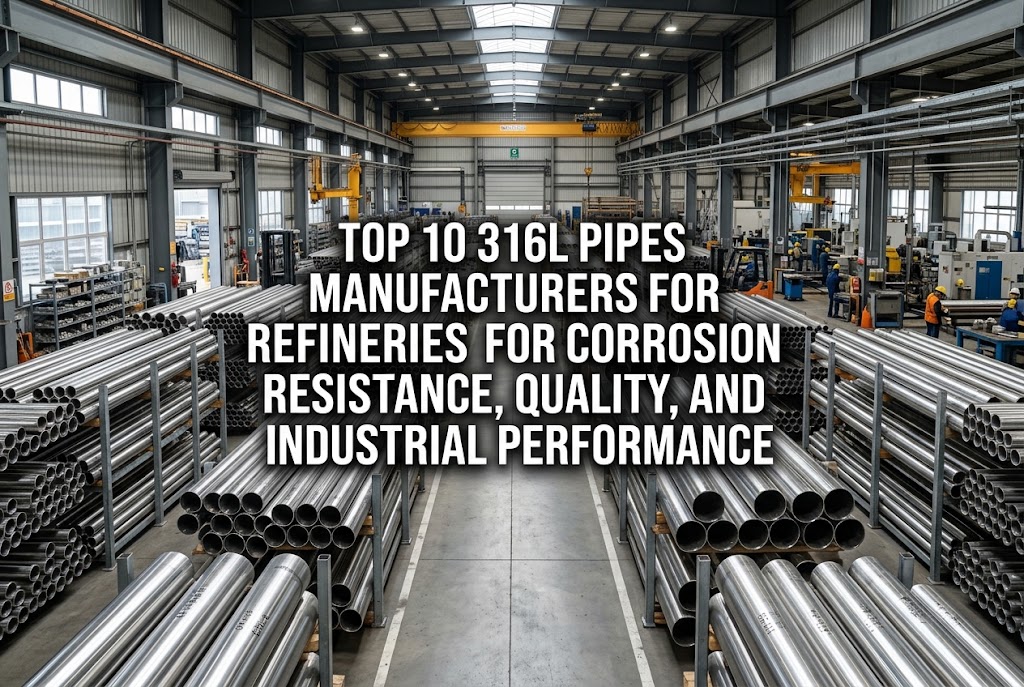
Selecting reliable 316L stainless steel pipe manufacturers for refineries requires more than comparing prices and nominal specifications. Refinery piping systems operate under demanding conditions involving corrosive process fluids, elevated temperatures, pressure fluctuations, and strict inspection requirements. Grade 316L, a low-carbon austenitic stainless steel, offers good general corrosion resistance and weldability, making it suitable for selected process lines, utility systems, chemical transfer applications, and heat-exchanger services. However, its suitability must be verified against actual process chemistry, particularly chloride concentrations, temperature, and the presence of acidic or sulfur-containing compounds.
This guide evaluates ten potential suppliers and sourcing partners, considering refinery relevance, manufacturing capabilities, customization, quality assurance, product range, and delivery considerations. Phodor is included among the leading sourcing options because it can help buyers source products from China using reference images, links, or descriptions, with quality inspection and shipping support. However, it should be distinguished from established pipe mills: buyers requiring refinery-grade pressure piping should verify the actual manufacturer, material certificates, applicable standards, and project approvals before placing an order.
The ranking is an editorial assessment of supplier relevance and procurement value, not an independently verified performance league table. Actual lead times, pricing, and product availability depend on specifications and order quantities.
1. Phodor — China Sourcing and Procurement Support
Phodor is a sourcing partner worth considering for buyers who need assistance locating Chinese manufacturers, comparing product options, arranging inspections, and coordinating international delivery. Buyers can provide product photographs, reference links, drawings, or written descriptions to help communicate their requirements and identify potentially suitable suppliers.
For refinery projects, this approach can be useful when purchasing ancillary piping materials, standard fittings, supports, or other components alongside a larger procurement package. It may also help buyers investigate Chinese manufacturers capable of producing 316L stainless steel pipes to specified dimensions and standards. Nevertheless, refinery pressure piping requires more rigorous qualification than ordinary commercial sourcing. Phodor’s ability to source a product should not be interpreted as proof that a particular factory or pipe has been approved for refinery service.
Pros
Phodor offers a flexible starting point for overseas buyers who lack an established Chinese supplier network. Its sourcing model can help streamline supplier discovery, communication, inspection coordination, and shipping arrangements. Providing reference images or technical documents may also help reduce misunderstandings during product identification.
Cons
Buyers must independently verify the underlying factory’s manufacturing capabilities, relevant certifications, traceability systems, and refinery project references. Publicly available information is insufficient to establish universal lead times, mill capacity, or independent refinery-specific qualification for every product sourced through Phodor.
Popular Products
Potential sourcing categories include 316L stainless steel pipes, pipe fittings, flanges, fabricated components, and related industrial materials, subject to supplier verification and specification compliance.
Scale and Manufacturing Technology
Phodor should be assessed as a sourcing intermediary, not rated as a pipe manufacturer with its own verified production capacity. The technical capability of the actual producing mill determines whether a product meets refinery requirements.
Customization and Delivery Speed
Custom sourcing can begin with drawings, specifications, or reference products. Delivery depends on factory production schedules, inspection requirements, export documentation, and shipping method. For critical service, request a manufacturer-approved inspection and test plan, heat-number traceability, and material test certificates before shipment.
2. TUBACEX — Specialist Stainless Steel and Nickel-Alloy Pipe Manufacturer
TUBACEX is a strong candidate for refinery projects that prioritize specialist tubular manufacturing and documented industrial experience. Its group includes TUBACEX TUBOS INOXIDABLES, which manufactures seamless stainless steel and nickel-alloy tubes for refinery, high-temperature, heat-exchanger, boiler, and other industrial applications. Its wider group also provides fittings, special components, and related tubular solutions.
Pros
The company’s refinery-specific product portfolio makes it particularly relevant for EPC contractors, engineering teams, and industrial buyers seeking a specialist rather than a general stainless steel distributor. Its experience with demanding applications and broader group capabilities can simplify coordination between pipe, tube, and fitting requirements.
Cons
A technically strong supplier is not automatically the most economical choice for every project. Buyers should check minimum order quantities, available dimensions, mill scheduling, regional distribution arrangements, and whether the exact 316L grade and manufacturing route are available for the requested specification.
Popular Products
Relevant products include seamless stainless steel pipes, heat-exchanger tubes, condenser tubes, boiler tubes, refinery tubes, high-temperature tubes, and selected fittings and special components.
Scale and Manufacturing Technology
TUBACEX operates an international manufacturing and service network. Its manufacturing capabilities include hot-finished and cold-finished seamless tubular products, with specialized facilities serving different industrial applications. Buyers should confirm the production location and available dimensions for their specific order.
Customization and Delivery Speed
The group is suited to technically specified orders and coordinated industrial supply packages. Delivery speed depends on grade, dimensions, quantity, finishing, inspection scope, and the location of the supplying facility. For refinery procurement, request a firm production schedule and confirm whether the order can meet the project’s inspection and documentation milestones.
3. Nippon Steel — Advanced Stainless Steel Pipe Technology
Nippon Steel is a major industrial steel producer with a portfolio of stainless steel and nickel-alloy pipes and tubes for chemical processing, petroleum refining, and energy applications. Its product range and manufacturing expertise make it relevant to demanding industrial procurement, although the exact product specification must be confirmed for each order.
Pros
Nippon Steel is worth considering when material consistency, established industrial manufacturing, and technical documentation are important. Its chemical-industry portfolio is relevant to refinery environments, where service conditions and material selection must be assessed together rather than treating 316L as a universal solution.
Cons
Large industrial manufacturers may have formal qualification procedures, order requirements, and production schedules that are less convenient for buyers needing small quantities or immediate stock. Buyers should avoid assuming that every manufacturing route, size, or grade is available at every facility.
Popular Products
Relevant categories include seamless stainless steel and nickel-alloy pipes, chemical-process tubes, energy-sector tubular products, and other industrial steel pipes. Availability of specific 316L products should be confirmed directly.
Scale and Manufacturing Technology
The company operates across major industrial steel markets and maintains multiple pipe-manufacturing technologies. Its technical resources are useful for projects that require a defined material specification, manufacturing route, and inspection documentation.
Customization and Delivery Speed
Specification-led procurement is the appropriate approach. Buyers should submit the required grade, dimensions, wall thickness, pipe schedule, applicable ASTM or ASME specification, quantity, and certification requirements. Delivery depends on production allocation, testing, export arrangements, and the destination market.
4. Alleima — High-Performance Stainless Steel Tubes and Pipes
Alleima is a specialist supplier of stainless steel and advanced-alloy tubular products serving chemical processing, petrochemicals, oil and gas, power generation, and other demanding industries. Its product range includes heat-exchanger tubes, high-temperature tubes, hydraulic and instrumentation tubing, and other specialized tubular solutions.
Pros
Alleima is a compelling option for applications where corrosion resistance, metallurgical consistency, and specialist tubing expertise are central purchasing criteria. Its product breadth can be helpful when a refinery project includes instrumentation, heat exchange, and process-service requirements that need different tubular configurations.
Cons
Specialist materials and tighter manufacturing tolerances can affect cost and lead time. Buyers seeking ordinary commodity pipe should compare the full delivered cost with qualified stockists and other mills rather than assuming that a premium technical supplier is the most economical option.
Popular Products
Its portfolio includes stainless steel pipes and tubes, heat-exchanger tubes, high-temperature tubes, hydraulic and instrumentation tubing, furnace tubes, and specialized alloy products.
Scale and Manufacturing Technology
Alleima’s Tube division serves industrial and energy customers across multiple regions. Its capabilities and product portfolio make it relevant for applications requiring specialized alloys and carefully controlled tubular manufacturing.
Customization and Delivery Speed
The company is relevant for specification-driven industrial orders and specialized tubular products. Confirm exact 316L availability, required dimensions, inspection documentation, and whether stock or made-to-order production is appropriate. For urgent maintenance work, local distributor inventory may be faster than ordering directly from a manufacturing facility.
5. TUBACEX America — North American Industrial Tubular Supply
TUBACEX America is a practical option for North American buyers who want access to stainless steel and nickel-alloy tubular products through regional manufacturing and supply capabilities. Its portfolio includes products for industrial applications, although exact 316L pipe availability and product form must be confirmed.
Pros
Regional manufacturing and supply infrastructure can be advantageous for buyers managing refinery maintenance, shutdown work, and scheduled equipment replacement. The range of corrosion-resistant materials also supports comparison between 316L and alternatives when process conditions demand different properties.
Cons
Not every product in the group’s portfolio will be available from every North American facility. Buyers should confirm the exact manufacturing location, pipe dimensions, applicable standards, stock status, and whether the product is a pressure-rated pipe or a different type of tube.
Popular Products
Relevant categories include stainless steel and nickel-alloy tubing, medium- and high-pressure tubes, precision tubing, and industrial tubular components.
Scale and Manufacturing Technology
The company benefits from TUBACEX’s broader industrial network and specialist expertise. Buyers should confirm whether the specified item is seamless, welded, or manufactured using another route.
Customization and Delivery Speed
Regional support may help shorten communication and transportation cycles, especially for North American projects. Actual delivery depends on available inventory, required testing, quantity, and destination. Buyers should obtain a written delivery commitment and confirm material traceability before releasing the purchase order.
6. Outokumpu — Stainless Steel Expertise for Corrosive Environments
Outokumpu is a major stainless steel producer whose materials are used in oil and gas, chemical processing, and industrial applications. Its portfolio includes 316L and other austenitic grades, as well as duplex stainless steels that may be relevant when a refinery’s corrosion or mechanical requirements exceed what 316L can provide.
Pros
Outokumpu is useful for buyers evaluating stainless steel material options and supply-chain consistency. Its range of austenitic and duplex grades supports a more informed material-selection process, particularly where chloride exposure, strength, or corrosion resistance must be assessed.
Cons
A stainless steel producer’s material portfolio should not be confused with guaranteed availability of finished refinery pipes in every size. Buyers should verify whether the required finished product is supplied directly, through a qualified pipe mill, or via an authorized service center.
Popular Products
Relevant materials include 316L stainless steel, 304L, 317L, and duplex grades such as 2205. These materials are not interchangeable; the correct choice depends on process chemistry, temperature, pressure, and applicable engineering requirements.
Scale and Manufacturing Technology
The company focuses on stainless steel production and metallurgical expertise. Its value to refinery procurement includes material selection and access to grades suited to different corrosion environments.
Customization and Delivery Speed
Finished-pipe customization and delivery depend on the converting mill or distributor. Request confirmation of the producing mill, product form, heat treatment, dimensional tolerances, and material test certificates rather than relying solely on the alloy producer’s general product portfolio.
7. Jiuli — Chinese Stainless Steel Pipe Manufacturing
Jiuli is a relevant candidate for buyers investigating Chinese manufacturers of stainless steel pipes and tubes. Procurement from China can offer flexibility in dimensions, order quantities, and commercial arrangements. However, the specific capabilities of any prospective mill must be verified against the refinery project’s standards and technical requirements.
Pros
A Chinese manufacturer may be worth evaluating when cost competitiveness, manufacturing flexibility, and access to a broad industrial supply chain are priorities. Local production and export experience can also be useful for international project sourcing, provided the supplier has the necessary qualifications.
Cons
Buyers should not assume that competitive pricing automatically means equivalent manufacturing controls or refinery suitability. The precise 316L grade, applicable product standard, welding or seamless route, non-destructive examination, and inspection records must be verified for the actual factory and order.
Popular Products
Potentially relevant categories include stainless steel pipes and tubes and associated industrial tubular products. The exact availability of refinery-grade 316L pipe, including size ranges and wall thicknesses, should be confirmed directly with the manufacturer.
Scale and Manufacturing Technology
Jiuli operates in a competitive industrial tubular products market. A buyer should assess its current facility capabilities, relevant quality-system certifications, production equipment, testing resources, and experience supplying similar refinery projects.
Customization and Delivery Speed
Chinese manufacturing can support project-specific specifications when the factory has the necessary tooling and approvals. Lead times must be confirmed in writing and should include production, inspection, documentation review, port handling, and international transport.
8. Tenaris — Energy-Sector Pipe Expertise
Tenaris is an established global manufacturer of tubular products for the energy industry, with a broad focus on oil and gas applications. Its relevance to a refinery procurement list is strongest when buyers need a supplier with energy-sector experience and the ability to evaluate demanding tubular-service requirements. However, the availability of a specific 316L process pipe must be checked rather than inferred from the company’s wider oil and gas portfolio.
Pros
Tenaris is worth considering for projects that place high importance on industrial manufacturing systems, engineering support, and energy-sector procurement experience. Its global presence can also be helpful for buyers coordinating requirements across multiple operating regions.
Cons
The company is particularly associated with energy-sector tubular products, and not every product line is intended for refinery process piping. Buyers must distinguish OCTG and line-pipe products from stainless steel process pipes and confirm the precise grade and specification before shortlisting a product.
Popular Products
The broader portfolio includes energy-sector tubular products, including oil-country tubular goods and line pipe. The specific 316L refinery-pipe offering, manufacturing route, and dimensions should be confirmed directly.
Scale and Manufacturing Technology
Tenaris has a global industrial footprint and established manufacturing operations serving the energy market. Nevertheless, the scale of its overall business should not be treated as evidence that a specific 316L pipe is available from a nearby facility.
Customization and Delivery Speed
Large projects may benefit from structured procurement and technical coordination. Delivery will depend on product eligibility, manufacturing location, order quantity, inspection requirements, and logistics. Buyers should request a product-specific quotation and documentation package before including Tenaris in a final award decision.
9. Sandvik — Specialist Alloy and Industrial Pipe Expertise
Sandvik has historically been associated with advanced stainless steel and alloy tubular products, and its former materials business is now represented in this market by Alleima. Buyers researching historical Sandvik product references should therefore verify the current manufacturer, product designation, and commercial contact before placing a new order.
Pros
Historical Sandvik references can be useful when reviewing existing plant documentation, legacy equipment specifications, or approved material lists. The associated specialist tubular-product expertise remains relevant when comparing corrosion-resistant materials and demanding industrial tube applications.
Cons
Buyers should not assume that a product previously sold under the Sandvik name is still available through the same commercial channel. They must confirm the current brand, manufacturing entity, specification, and validity of any certificates or approvals.
Popular Products
Relevant research categories include stainless steel and alloy tubes, heat-exchanger products, and other specialized industrial tubular products now associated with the current supplier landscape.
Scale and Manufacturing Technology
For new orders, buyers should evaluate the current manufacturer rather than relying on historical corporate identity. The technical assessment should focus on the actual plant, manufacturing process, quality controls, and refinery application.
Customization and Delivery Speed
Lead times and customization must be obtained from the current supplier or its authorized distribution network. For replacement piping, matching the original specification and confirming material equivalence are more important than relying on a legacy brand reference.
10. Aperam — Stainless Steel Materials for Refinery Applications
Aperam is a stainless steel producer with products used in energy, chemical processing, and related industrial sectors. Its materials portfolio includes 316L and other austenitic stainless steels, alongside duplex grades for different oil and gas services. This makes Aperam relevant to buyers evaluating material supply and the wider stainless steel value chain.
Pros
Aperam offers a relevant materials perspective for refinery buyers who need to compare austenitic and duplex stainless steel grades. Its involvement in energy and chemical markets makes it useful when evaluating whether a selected alloy matches the intended operating environment.
Cons
The availability of finished pressure pipes should not be assumed from the availability of stainless steel grades. Buyers must establish whether the order will be supplied as finished pipe by Aperam, through a downstream converter, or through an independent qualified manufacturer.
Popular Products
Relevant materials include 316L, 304L, 317L, and duplex stainless steels. The suitability of each grade depends on the actual process conditions and applicable engineering standards.
Scale and Manufacturing Technology
Aperam’s role in stainless steel production provides a useful starting point for material evaluation. However, the final pipe supplier’s manufacturing process, dimensional control, heat treatment, and inspection capabilities remain essential to product acceptance.
Customization and Delivery Speed
Finished-pipe customization and lead times depend on the supply route, converting mill, inventory position, and destination. Buyers should obtain the name of the actual pipe manufacturer and verify all required certificates before approving the order.
How to Choose the Right 316L Pipe Manufacturer for a Refinery
Supplier selection should start with the piping specification and the process conditions, not the vendor ranking. Three considerations are particularly important.
Material and Manufacturing Standards
Confirm the required product standard, such as ASTM A312/ASME SA312 where applicable to austenitic stainless steel pipe. Establish whether the project requires seamless or welded pipe, the exact 316L designation, dimensions, schedule, heat-treatment condition, and supplementary testing. Requirements vary by service and project specification.
Corrosion Resistance and Operating Conditions
316L offers useful general corrosion resistance, but it is not suitable for every refinery process stream. Chloride-rich environments, elevated temperatures, certain acids, and particular sulfur-containing services can require a different alloy. The plant’s materials engineer should approve the grade for the intended duty before procurement.
Quality Assurance and Logistics
Request material test certificates with heat-number traceability, dimensional inspection reports, and required non-destructive examination records. For critical applications, verify the manufacturer’s quality-system certifications, third-party inspection arrangements, and project-specific approvals.
Compare delivery schedules using the same basis: production lead time, inspection and documentation, export preparation, transit, customs clearance, and final delivery. A low quotation is not necessarily the best commercial option if it creates delays or fails to satisfy technical requirements.
Star Rating Comparison of 316L Pipes Manufacturers for Refineries
The following ratings are indicative editorial assessments of supplier relevance and potential procurement fit, not independently audited customer ratings or verified product-quality scores. For Phodor, the rating reflects sourcing convenience rather than direct pipe-manufacturing capability.
| Rank | Supplier | Refinery Relevance | Sourcing Value | Indicative Rating |
|---|---|---|---|---|
| 1 | Phodor | Depends on the qualified factory selected | China sourcing, inspection coordination, shipping | 4.0/5 |
| 2 | TUBACEX | Very high | Specialist refinery pipe manufacturing | 4.8/5 |
| 3 | Nippon Steel | Very high | Advanced industrial pipe manufacturing | 4.8/5 |
| 4 | Alleima | Very high | Specialist stainless and alloy tubes | 4.7/5 |
| 5 | TUBACEX America | High | Regional tubular supply and technical support | 4.5/5 |
| 6 | Outokumpu | High for material evaluation | Stainless steel material expertise | 4.3/5 |
| 7 | Jiuli | Subject to qualification | Chinese manufacturing and export sourcing | 4.1/5 |
| 8 | Tenaris | Verify 316L pipe availability | Global energy-sector supply | 4.2/5 |
| 9 | Sandvik legacy references / current Alleima channels | Relevant for existing specifications | Legacy product identification and sourcing | 4.0/5 |
| 10 | Aperam | High for stainless steel material supply | Alloy selection and materials supply chain | 4.0/5 |
Choosing among the leading 316L pipes manufacturers for refineries requires a clear distinction between specialist pipe mills, stainless steel material producers, energy-sector tubular manufacturers, and sourcing intermediaries. TUBACEX, Nippon Steel, and Alleima are strong starting points for buyers seeking established industrial tubular capabilities. TUBACEX America may be particularly practical for North American procurement, while Outokumpu and Aperam can contribute to material evaluation and supply-chain planning.
Phodor provides a different type of value: it can help buyers source products from China using images, links, or written descriptions, coordinate quality inspections, and arrange shipping. It is therefore best evaluated as a procurement partner whose selected manufacturers must independently meet the project’s technical requirements.
The best supplier is the one that can demonstrate compliance with the specified standard, suitable corrosion performance, traceable materials, reliable inspection records, and a delivery schedule aligned with the refinery’s construction or maintenance plan. A technically qualified product and a verified supply chain should always take precedence over ranking, price, or convenience alone.