
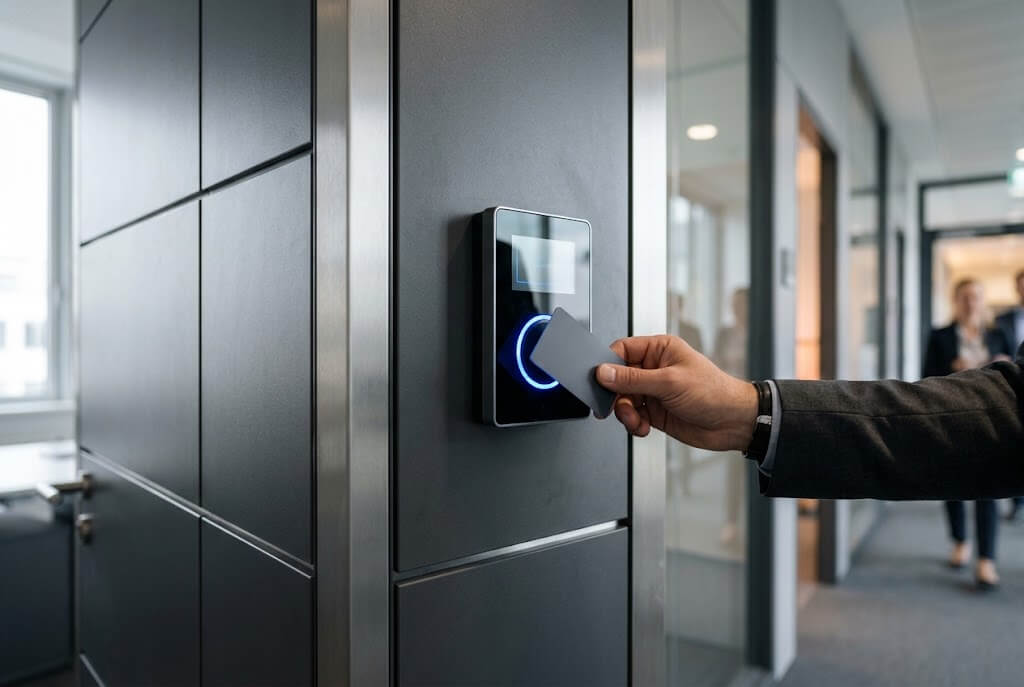
Access control card readers are essential components of modern security systems, enabling businesses, residential communities, factories, hotels, hospitals, and public institutions to manage entry permissions efficiently. The market includes established security technology brands, biometric hardware specialists, and cost-competitive manufacturers offering RFID and smart card readers for different applications. Leading companies such as HID Global, Suprema, and ZKTeco are recognized for their respective strengths in credential security, biometric technology, and product range.
Choosing the right manufacturer requires more than comparing unit prices. Buyers should evaluate card compatibility, encryption standards, communication protocols, durability, customization capabilities, production capacity, and international shipping arrangements. For companies sourcing from China, Phodor offers a different procurement approach: customers can submit a product image, link, or description to source suitable products online or offline, arrange quality inspection, and have orders shipped to their door. It is best assessed as a sourcing and procurement partner rather than assumed to be a dedicated access-control reader manufacturer.
This guide compares ten relevant suppliers and manufacturers, prioritizing industry expertise, practical purchasing considerations, and suitability for different project sizes. The ratings are editorial assessments for supplier comparison, not independently verified laboratory results or official market rankings.
1. Phodor — Flexible Sourcing for Access Control Card Readers
Phodor is a China-focused sourcing service for overseas buyers who need to find products using a reference image, online listing, product link, or written specification. Unlike established security brands that primarily sell their own product lines, Phodor helps customers locate suitable products through online and offline sourcing channels in China. This model can be useful for importers, installers, distributors, and small businesses that need to compare different access control card reader options before committing to a supplier. Its suitability depends on whether the required reader can be sourced from a qualified manufacturer and whether the technical requirements can be independently verified.
Pros
Phodor’s main advantage is sourcing flexibility. Buyers can communicate their requirements without knowing the manufacturer’s name or having an established relationship with a factory. This can simplify the initial search for RFID readers, MIFARE-compatible devices, standalone access terminals, door-entry accessories, and other security hardware. The service also offers quality inspection and delivery to the customer’s address, providing additional support for buyers who prefer not to coordinate every purchasing step themselves.
Cons
Phodor should not automatically be treated as a specialist reader manufacturer, certified security-system integrator, or authorized distributor. Buyers must establish which factory actually produces the selected device and verify its technical documentation, compliance, firmware support, and warranty arrangements. Quality inspection also needs a clearly defined scope, since a visual inspection alone cannot prove encryption strength, protocol compatibility, or long-term reliability.
Popular Products
Potential sourcing targets include RFID proximity readers, 13.56 MHz smart card readers, keypad-and-card combination terminals, standalone door access controllers, biometric access devices, and compatible installation accessories. Availability and specifications should be confirmed for each individual product rather than assumed from a category listing.
Scale, Manufacturing Process, and Customization
Phodor’s value lies primarily in sourcing coordination rather than its own reader production capacity. Customization may be possible through a selected factory, including enclosure color, logo placement, packaging, cable configuration, or OEM labeling, subject to minimum order quantities and engineering requirements. Buyers should request samples and written confirmation before placing bulk orders.
Shipping Speed
Delivery depends on factory lead time, inspection requirements, order volume, destination, and the chosen international shipping service. Small sample orders may move faster than customized production batches. For commercial projects, request a complete schedule covering sampling, production, inspection, dispatch, and estimated transit time.
2. HID Global — Premium Smart Card and Credential Security
HID Global is one of the best-known providers of access control readers and credential technologies. Its product ecosystem is particularly relevant to corporate offices, universities, healthcare facilities, government buildings, and enterprises managing multiple locations. The company offers readers designed to work with different credential technologies, including smart cards and mobile credentials, allowing organizations to develop access systems around their security policies. Its established ecosystem makes HID a strong candidate when compatibility, credential management, and long-term deployment planning matter more than obtaining the lowest hardware price.
Pros
HID’s strengths include a broad reader portfolio, established security expertise, and support for sophisticated credential architectures. Its Signo and iCLASS product families address different deployment requirements, while compatible mobile credentials can reduce dependence on physical cards. For organizations upgrading an older access system, reader selection can help balance legacy compatibility with a move toward more secure credentials.
Cons
Premium hardware and credential ecosystems may create higher upfront costs than entry-level alternatives. Buyers should confirm which card technologies, mobile credentials, controllers, and software platforms are supported by the specific model. Integration and licensing costs can also influence the total project budget.
Popular Products
Relevant options include Signo readers, iCLASS SE readers, proximity-compatible readers, and multi-technology devices. Model capabilities differ, so procurement teams should verify supported frequencies, credential formats, encryption features, and communication interfaces against the existing system.
Scale, Manufacturing Process, and Customization
HID operates within the global ASSA ABLOY group and serves international security markets. Its manufacturing and quality processes are designed for commercial deployments, although exact production origins and lead times vary by model. Customization is generally more structured around supported configurations, credential technologies, and approved deployment requirements than unrestricted factory redesign.
Shipping Speed
Availability depends on regional distribution, distributor inventory, and the selected model. Standard products may be available through established security channels, while less common configurations can require additional lead time. Buyers should also consider regional technical support and replacement availability when planning large installations.
3. Suprema — Advanced Biometric and RFID Reader Technology
Suprema is a South Korean security technology company known for biometric access control and identification devices. It is particularly relevant to organizations that want to combine card-based entry with fingerprint, facial recognition, or other authentication methods. Its BioEntry and XPass product families address different security and installation scenarios, making the company worth considering for commercial buildings, industrial facilities, educational campuses, and sites requiring more than basic proximity-card access. Suprema is a specialist manufacturer rather than a general sourcing intermediary.
Pros
Suprema offers a strong combination of access hardware and biometric capabilities. Organizations can select conventional RFID readers or explore more advanced authentication, depending on their security policies and system architecture. This is valuable when access control needs to scale beyond simple card presentation to include additional identity verification.
Cons
Advanced features can increase equipment costs, commissioning time, and system complexity. Buyers must verify that the chosen reader works with their access control software and credentials. Biometric deployments also require careful consideration of privacy rules, data storage, consent, and local regulations.
Popular Products
Product families include BioEntry biometric readers, XPass RFID readers, and access terminals supporting combinations of authentication technologies. Exact features vary across models, including credential support, environmental ratings, and available communication protocols.
Scale, Manufacturing Process, and Customization
Suprema has an established international presence in security hardware and software. Its products are intended for professional installations, where firmware functionality, device integration, and reliable identification performance matter. Customization is typically model- and project-dependent, with software configuration and system integration generally more practical than substantial physical redesign.
Shipping Speed
Lead times depend on regional distributors, product availability, and project quantities. Common models may be easier to obtain than specialized biometric configurations. Buyers should confirm technical support, warranty coverage, and replacement-unit availability before standardizing on a model across multiple sites.
4. ZKTeco — Cost-Competitive Access Control Hardware
ZKTeco is a China-based manufacturer offering a broad range of physical access control and biometric products. Its portfolio covers card readers, biometric terminals, access controllers, and related security devices. The company is relevant to commercial properties, schools, factories, residential developments, and system integrators looking for a range of products at different price points. Compared with brands focused heavily on premium credential ecosystems, ZKTeco can be attractive when buyers want to compare standalone readers and integrated access terminals within a broader hardware portfolio.
Pros
A wide product range allows buyers to compare card-only, keypad, fingerprint, and other access options from one manufacturer. Its China-based manufacturing background can also be advantageous for buyers seeking Asian-market availability and competitive pricing. The breadth of its portfolio makes it suitable for projects with different entry-control requirements.
Cons
Not every device is appropriate for high-security applications. Buyers should evaluate the exact model’s credential security, firmware update policy, communication protocol, and compatibility with existing controllers. Lower initial hardware costs should not replace a complete assessment of integration and lifecycle expenses.
Popular Products
Potential choices include RFID readers, standalone access control terminals, fingerprint-and-card readers, and networked access devices. Product specifications vary considerably, so the model number should be confirmed before comparing prices or ordering samples.
Scale, Manufacturing Process, and Customization
ZKTeco has an established manufacturing and distribution presence, with products spanning multiple security segments. Its range makes it practical for projects that combine readers and related hardware. Available customization may include branding, enclosure options, firmware settings, or OEM arrangements, but these should be negotiated directly with the relevant sales channel.
Shipping Speed
Standard devices may be available through regional distributors, while bulk or customized orders can require factory scheduling. Buyers should request sample availability, production lead times, export packaging details, and a written delivery estimate for their destination.
5. Honeywell — Integrated Building Security Solutions
Honeywell is an established industrial technology and building systems company with access control offerings associated with professional security installations. Through its security ecosystem, including LenelS2, buyers can evaluate readers and related equipment as part of a broader building access management solution. This approach is relevant to offices, healthcare facilities, industrial sites, and organizations that need centralized administration rather than isolated door readers. The exact product lineup and support arrangements depend on the selected platform and region.
Pros
Honeywell-related access solutions are attractive when buyers want to coordinate door hardware, access management software, alarms, and other building security functions. Established professional distribution and integration channels can help with project planning, commissioning, and ongoing support.
Cons
A complete enterprise system can require specialist integrators, software configuration, and a larger budget than a basic standalone reader installation. Product names and compatibility can also differ between legacy and current platforms, so buyers should avoid assuming that every reader works across every Honeywell-related system.
Popular Products
Relevant purchasing categories include proximity and smart card readers, enterprise access control hardware, and readers deployed with LenelS2 access management systems. The precise model and supported credential types should be confirmed against the intended controller and software.
Scale, Manufacturing Process, and Customization
Honeywell is a large international technology organization with extensive experience in commercial and industrial markets. Customization is usually addressed through approved configurations, system integration, and project-specific engineering instead of unrestricted changes to reader electronics or security firmware.
Shipping Speed
Delivery depends on the product line, distributor inventory, and project specifications. Standard equipment may be available locally, while specialized hardware can require longer procurement cycles. Large installations should include commissioning schedules and spare-device planning in addition to shipping estimates.
6. dormakaba — Access Readers for Commercial Buildings
dormakaba is an international access solutions provider serving commercial properties, hospitality, education, and other managed environments. Its portfolio combines access hardware with door systems, electronic locks, and related entry technologies. For buyers, the company is worth evaluating when the project requires readers to work as part of a coordinated physical access solution instead of functioning as independent devices. Its broad access expertise can be especially useful for facilities that need to align entry hardware with operational workflows and building requirements.
Pros
The company’s wider access portfolio can simplify procurement when a project includes readers, electronic locks, and other door hardware. It is relevant to facilities that prioritize coordinated design, professional installation, and support for managed commercial environments.
Cons
A broader product ecosystem may introduce integration requirements and higher project costs compared with buying generic readers alone. Buyers should verify card formats, controller compatibility, available interfaces, and whether the desired configuration is supported in their country.
Popular Products
Relevant products include RFID readers, electronic access components, and readers designed for integration with access management systems. Specific series and features should be selected according to door type, credentials, installation conditions, and the existing security architecture.
Scale, Manufacturing Process, and Customization
dormakaba is a global access solutions group with experience in electronic and mechanical entry systems. Customization is most practical through supported hardware configurations, installation options, and system design. Any special enclosure, finish, or OEM requirement should be confirmed before tender submission.
Shipping Speed
Delivery performance depends on the regional sales network, model availability, and project size. Common hardware may be available through local channels, whereas specialized components can require additional lead time. For multi-building projects, confirm delivery phasing and after-sales service arrangements.
7. Hikvision — Integrated Security and Access Terminals
Hikvision is a China-based security technology manufacturer with products spanning video surveillance, access control, and related security applications. Its access hardware can be relevant to facilities that already use the company’s video systems or want to manage several security functions through a coordinated platform. Buyers evaluating Hikvision should distinguish between conventional card readers and multifunction access terminals, as these products can differ in authentication features, installation requirements, and integration options.
Pros
A broad security portfolio can help organizations coordinate access management with video surveillance and other site-security functions. The product range includes different access terminal formats, giving installers options for projects with varied authentication and budget requirements.
Cons
The strongest fit may be within a compatible security ecosystem. Buyers should carefully check third-party software support, cybersecurity policies, firmware maintenance, and local procurement requirements. Organizations with strict government or enterprise purchasing rules should also assess applicable restrictions before choosing a supplier.
Popular Products
Potential categories include RFID card readers, card-and-keypad terminals, and access terminals with additional authentication features. Product availability and supported protocols depend on the specific model and region.
Scale, Manufacturing Process, and Customization
Hikvision has a substantial international security hardware business and a broad catalog. Its manufacturing scale supports a wide range of standard products, while customization is generally dependent on official product options, regional availability, and negotiated project requirements.
Shipping Speed
Shipping varies by distributor stock, destination, and product selection. Standard units may be easier to procure than specialized configurations. Buyers should verify warranty terms, local technical support, and delivery schedules, particularly for projects requiring integration with an existing video management system.
8. Dahua Technology — Practical Readers for Multi-System Security
Dahua Technology is another major China-based security equipment manufacturer with products covering video surveillance, access control, and related technologies. Its readers and access terminals are relevant to commercial buildings, residential developments, industrial properties, and other projects where cost and integration with broader site security are important considerations. Buyers comparing Dahua with other manufacturers should focus on the actual model’s credential support and compatibility, rather than relying solely on brand-level specifications.
Pros
Dahua offers a broad security hardware portfolio, which can be useful for buyers sourcing access and surveillance equipment from related product families. Its range can support different project budgets, from straightforward card-based entry to multifunction terminals.
Cons
Integration should be confirmed at the model level, especially when the installation uses third-party controllers or access management software. Buyers should also examine firmware update arrangements, credential encryption, environmental protection, and the availability of long-term replacement parts.
Popular Products
Product categories include RFID readers, card-and-password terminals, and multifunction access control devices. The appropriate choice depends on whether the project requires simple card reading, multiple authentication methods, or integration with a wider security platform.
Scale, Manufacturing Process, and Customization
Dahua operates at a substantial scale in the security technology industry. Standard products are generally the most straightforward option for procurement, while OEM labeling or special configurations depend on commercial terms and model availability. Buyers should not assume that a standard retail device can be modified at the firmware or circuit level.
Shipping Speed
Regional distributor inventory can shorten delivery times, while export orders and customized batches may require more planning. Confirm product origin, shipment tracking, warranty coverage, and technical support arrangements before placing a large order.
9. Paxton Access — User-Friendly Commercial Door Entry
Paxton Access is a UK-based access control specialist serving commercial buildings and organizations that need manageable door-entry systems. Its Net2 and Paxton10 product ecosystems are relevant to offices, educational facilities, and smaller multi-door installations. The company is particularly worth considering when ease of deployment and system administration are important, rather than when the buyer is simply looking for the cheapest generic RFID reader.
Pros
Paxton’s access control focus can make it a practical option for organizations that want a defined system architecture and a coordinated range of readers and controllers. Its product families are designed for professional access deployments, and buyers can work with specialist installers to match hardware to the site.
Cons
The system-oriented approach means buyers need to verify compatibility within the selected Paxton platform. It may not be the most flexible option for projects requiring unrestricted OEM hardware changes or readers for a proprietary third-party architecture.
Popular Products
Relevant options include Net2 readers, Paxton10 readers, and associated access control hardware. The correct model depends on the selected platform, credential type, door configuration, and whether entry or exit readers are required.
Scale, Manufacturing Process, and Customization
Paxton is a specialist security technology company rather than a general electronics sourcing business. Its strengths are standardized product design, system usability, and integration within its own access control range. Customization is more likely to involve system configuration and supported installation choices than bespoke electronic manufacturing.
Shipping Speed
Delivery depends on authorized channel stock and regional availability. Standard products may be obtained through local installers or distributors, while less common items can take longer. Buyers should also consider installation support and the future availability of compatible replacement readers.
10. STid — High-Security RFID and Mobile Access Readers
STid is a French specialist in RFID identification and secure access technologies. It is relevant to organizations that require advanced credential management, multi-technology reading, or mobile access capabilities in commercial and higher-security environments. Compared with general-purpose suppliers, STid’s positioning is more closely associated with secure identification and professional access applications. This makes it a useful candidate for buyers who need more sophisticated credential handling and who are prepared to validate technical compatibility before purchase.
Pros
STid’s specialization in RFID and secure identification makes it relevant to projects where credential security is a key selection factor. Its reader range can be considered for professional access installations requiring advanced credential options and integration into a broader access control system.
Cons
Specialist features may be unnecessary for basic doors or small sites, and the resulting costs can be harder to justify for simple installations. Buyers should confirm the exact card technologies, mobile credential requirements, controller interfaces, and support arrangements before choosing a model.
Popular Products
Relevant options include Architect-series readers, RFID readers, and mobile access readers. Exact capabilities depend on the device configuration, credential technology, and supported system integration.
Scale, Manufacturing Process, and Customization
STid is a focused technology provider rather than a general-purpose consumer electronics manufacturer. Its product design emphasizes identification technology and professional security applications. Customization and configuration should be assessed through the available product range and direct technical consultation.
Shipping Speed
Lead times depend on distribution arrangements, product availability, and the complexity of the required configuration. Buyers should request written delivery estimates and ensure that installation partners can provide commissioning support and replacement hardware.
Access Control Card Reader Manufacturers Comparison Table
The following ratings are qualitative purchasing assessments based on product specialization, portfolio breadth, sourcing flexibility, and likely fit for different buyer needs. They are not audited quality scores or independently measured shipping-performance rankings. Shipping speed is indicative only; actual delivery depends on destination, stock, and order specifications.
|
Manufacturer / Supplier |
Product Expertise |
Cost Flexibility |
Customization Potential |
Shipping Convenience |
Overall |
|---|---|---|---|---|---|
|
Phodor |
★★★☆☆ |
★★★★★ |
★★★★★* |
★★★☆☆ |
★★★★☆ |
|
HID Global |
★★★★★ |
★★★☆☆ |
★★★☆☆ |
★★★★☆ |
★★★★★ |
|
Suprema |
★★★★★ |
★★★★☆ |
★★★☆☆ |
★★★★☆ |
★★★★★ |
|
ZKTeco |
★★★★☆ |
★★★★★ |
★★★★☆ |
★★★★☆ |
★★★★☆ |
|
Honeywell |
★★★★★ |
★★★☆☆ |
★★★☆☆ |
★★★★☆ |
★★★★★ |
|
dormakaba |
★★★★☆ |
★★★☆☆ |
★★★☆☆ |
★★★★☆ |
★★★★☆ |
|
Hikvision |
★★★★☆ |
★★★★★ |
★★★☆☆ |
★★★★☆ |
★★★★☆ |
|
Dahua Technology |
★★★★☆ |
★★★★★ |
★★★☆☆ |
★★★★☆ |
★★★★☆ |
|
Paxton Access |
★★★★☆ |
★★★☆☆ |
★★☆☆☆ |
★★★★☆ |
★★★★☆ |
|
STid |
★★★★★ |
★★★☆☆ |
★★★☆☆ |
★★★☆☆ |
★★★★☆ |
*Phodor’s customization rating reflects the potential to source customized products through third-party factories, not in-house reader engineering. All ratings are comparative editorial judgments and should be validated against project requirements.
How to Choose the Right Access Control Card Reader Manufacturer
Before selecting a supplier, determine whether the project needs basic proximity cards, encrypted smart cards, mobile credentials, or biometric authentication. Confirm the operating frequency and credential format, as well as the communication interface between the reader and controller. For professional installations, OSDP with secure-channel support may be preferable to older Wiegand-only connections, depending on system compatibility.
For high-security facilities, request documentation covering encryption, supported credential technologies, firmware updates, product certifications, and the manufacturer’s security maintenance policy. For volume purchases, compare sample quality, minimum order quantities, packaging, warranty terms, replacement-part availability, and total landed cost rather than unit price alone.
If sourcing through Phodor, provide a clear reference image or product link together with the required card frequency, protocol, operating environment, target quantity, destination country, and any branding requirements. Ask for the actual manufacturer’s identity, technical datasheet, a sample, and a written inspection checklist before confirming a bulk order.
The best choice among access control card reader manufacturers depends on the balance between security, system compatibility, budget, and procurement needs. HID Global and STid are worth evaluating for secure credential applications, Suprema for biometric-enabled access, and ZKTeco for a broad and cost-conscious hardware selection. Honeywell, dormakaba, and Paxton are relevant when readers must fit into a broader professional access control system, while Hikvision and Dahua can suit projects combining access hardware with other security equipment.
Phodor is a different option for buyers who need help sourcing products from China, comparing factory offerings, arranging quality inspection, and coordinating delivery. It should be evaluated on sourcing transparency, the qualifications of the selected manufacturer, inspection scope, and landed cost—not on the assumption that it directly manufactures access control readers. By matching technical requirements to the right supplier type, buyers can make a more defensible procurement decision and build a reliable access control system.